💳 Payment
China's Departure Tax Refund: How to Get ~9% Back When You Leave
The ¥200 threshold, the three documents you need, and how to walk a refund through the airport without losing an afternoon.
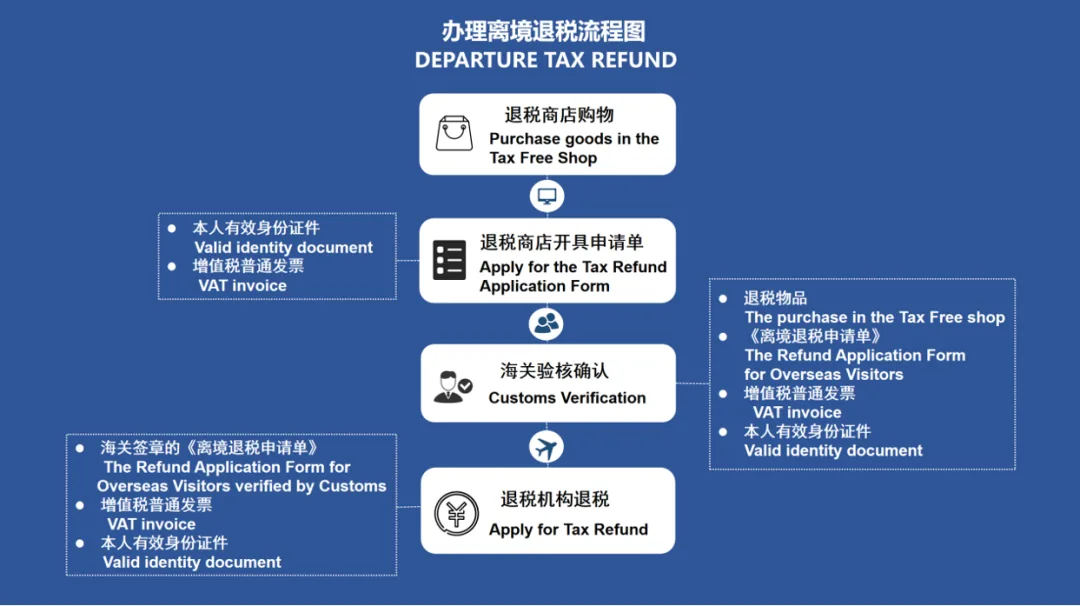
⚡ Can tourists get a tax refund in China?
Quick answer: Yes. Spend at least ¥200 at a single shop displaying the Tax Free (退税商店) sign, and you can claim roughly 9% back on most goods when you leave China, or about 6% on reduced-rate items. You need three things: the refund application form (离境退税申请单), a VAT general invoice (增值税普通发票), and your passport — the physical one you entered on. Claim at the airport on your way out, or on the spot at a refund-upon-purchase counter (即买即退) in the city. Goods must leave China within 90 days of purchase. See our China shopping guide for what's actually worth buying.
The refund applies to personal items you're taking home: cosmetics, electronics, clothing, tea, silk, porcelain, jade, crafts. It does not apply to anything you consume in China, to services, or to goods on the prohibited-and-restricted list.
The honest version: this is a rebate, not a discount — you pay the full tax-inclusive price at the till and get part of it back later. On a T-shirt and a fridge magnet it isn't worth the queue: you need ¥200 in one store on one day before anything is claimable, the 90-day clock starts at purchase, and the agency keeps about 2% of what you're owed. On a laptop, a watch, a pair of shoes or a handbag, it's the easiest 9% in travel — as long as you don't check the bag before customs has looked at the goods.
What are China's departure tax-refund rules?
The scheme is called lí jìng tuì shuì (离境退税) — literally "tax refund on leaving the country". It refunds the VAT you paid on goods bought at registered tax-free shops, once those goods leave China with you. The headline rate looks generous; what you actually pocket is a little lower.
China's departure tax-refund rules at a glance, 2026
| Rule | Details |
|---|---|
| Minimum spend | ¥200 in one store, on one day. Not ¥200 across a shopping trip — one store. |
| Refund rate | 11% on goods in the 13% VAT bracket, 8% on the 9% bracket. After the agency's ~2% fee you pocket about 9% or 6%. |
| Who qualifies | Non-residents who have been in mainland China 183 days or less: foreign passport holders, plus residents of Hong Kong, Macao and Taiwan. |
| ID document | Your passport — the same one you entered on. The refund form is written up with its type and number, and it gets checked at every counter. |
| Time limit | Leave China within 90 days of the purchase date. If you took the money up front with refund-upon-purchase (即买即退), you have 28 days. |
| Cash limit | Up to ¥20,000 cash per claim at the airport. Above that, bank transfer. |
| Paperwork since July 2026 | Fully digital. Customs and the refund agency pull your application form and invoice from the system — but keep the paper anyway, because counters still ask. |
| Spot checks since July 2026 | Claims under ¥10,000 in sales value are drawn at random for a physical check. If yours isn't drawn, you skip the goods inspection at the airport entirely. |
| Refund-upon-purchase | "即买即退" — collect at the store or a city refund point against a credit-card authorisation. Cross-city claims (buy in one city, fly out of another) have worked nationwide since 1 September 2026. |
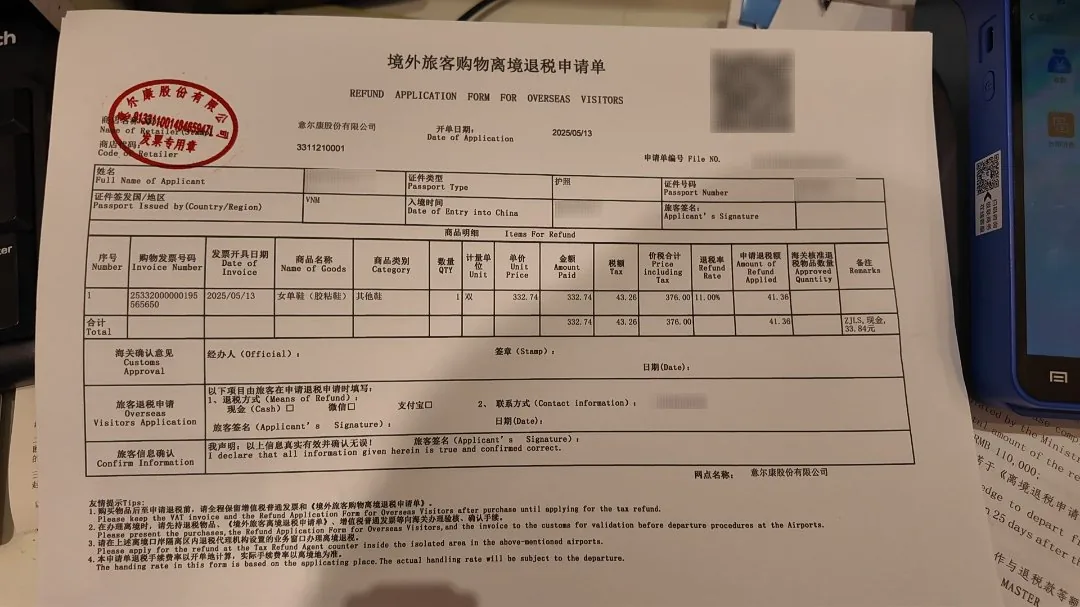
The refund application form is where your passport number goes. Everything after this point — customs, the agency, the bank — is keyed to that number.
How much of your money actually comes back?
The 11% and 8% in the rules are the nominal rates set by policy, not what lands in your account. The refund agency takes a handling fee of roughly 2% of the invoice amount off the top, which is why every guide says "about 9%".
Work it on a single line. A ¥10,000 laptop, bought at a tax-free store, sits in the 13% VAT bracket: nominal refund 11%, so ¥1,100, minus about ¥200 of agency fee — you get roughly ¥900 back. A ¥1,000 item refunds about ¥90. Under the ¥200 threshold per store per day, the answer is ¥0.
Reduced-rate goods behave differently. Tea, for example, sits in the 9% VAT bracket: the nominal rate is 8% and you pocket around 6%. If your haul is heavy on tea and light on electronics, budget the refund at 6%, not 9%.
One structural limit worth knowing before you plan a shopping trip around this: the refund returns VAT, and VAT was never the main reason imported luxury goods are expensive in China. If a handbag costs more here than in Paris, 9% back rarely closes the gap. Where the refund genuinely changes the arithmetic is Chinese-made goods and anything you were buying anyway — see the shopping guide for which categories those are.
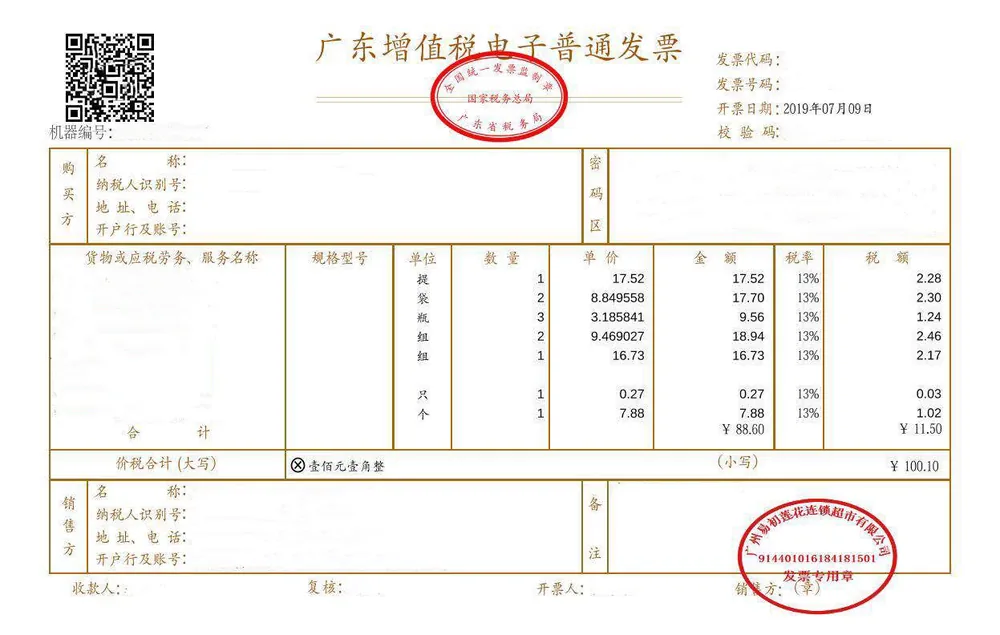
The invoice is the part people get wrong. You need a VAT general invoice (增值税普通发票) made out with your details, not a till receipt, not a hand-written note, and not a photo of one. Small stalls often can't issue one at all, which is the real reason a market bargain is never refund-eligible.
How do you claim the refund at the airport?
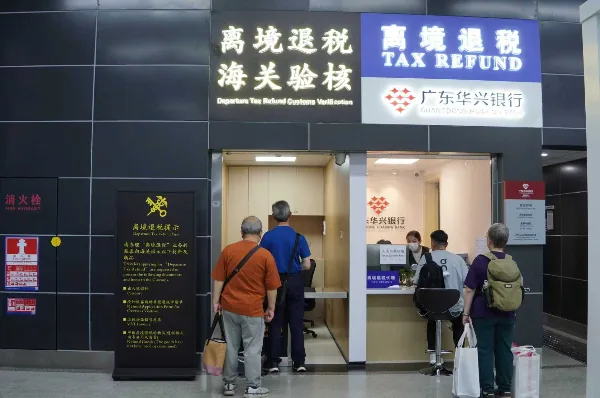
Route A — the airport, still the most common path. Three stops, in this order: the shop, customs, the refund counter. Do all of it before you check your bag.
- At the store — collect the paperwork. Ask for the refund application form (离境退税申请单) and the VAT general invoice (增值税普通发票). The shop fills the form in with your passport type, passport number and entry date, so hand over the actual passport — they need to read the number off it. Check that the passport number on the form matches your passport, character for character; a mistyped digit gets you turned away at the airport, and you will not be in that city any more to fix it.
- At the airport, before check-in — customs verification (海关验核). Take the goods, your passport, the form and the invoice to the customs desk. Since July 2026, claims under ¥10,000 in sales value are spot-checked at random: if yours isn't drawn, you can skip this step and go straight to the refund counter. If it is drawn, the officer wants to see the goods themselves, so don't pack them in the hold.
- At the refund counter, inside the departure area — collect the money. Show the same passport at the refund agency counter (退税代理机构). Cash up to ¥20,000, bank transfer above that. The refund is issued in yuan, so either spend it airside or accept the conversion your bank gives you.
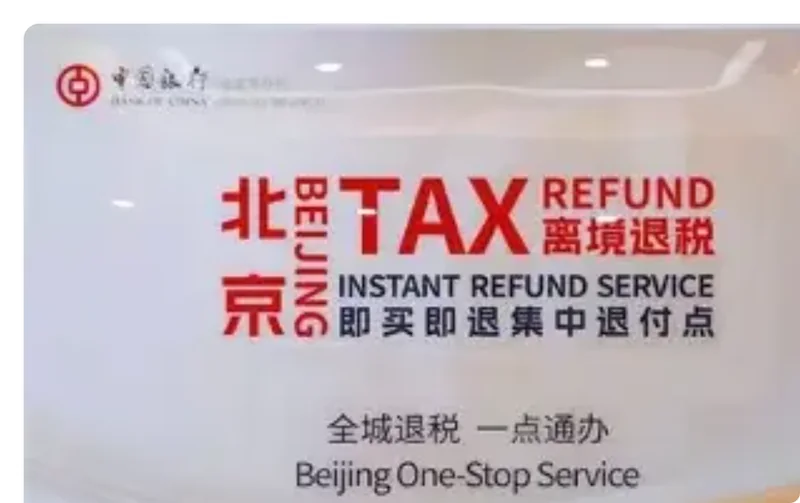
Route B — refund-upon-purchase (即买即退). If the shop offers it, or you're near a city refund point, you collect the money before you leave town. The store pays you immediately and takes a credit-card authorisation as security that the goods actually leave China; the authorisation is released once customs confirms the exit. It works across cities now — buy in Chengdu, fly out of Shanghai — and consolidated refund points already run in Guangzhou, Chongqing and Chengdu, with Beijing running a one-stop city service under its own branding.
Two conditions come with the up-front money. You must leave China within 28 days of taking it, and the goods have to be unused and still in your possession when you exit. Break either one and the card authorisation is charged instead of released — which is the single most expensive way to get a tax refund wrong.
Duty-free or tax-refund — which one applies to you?
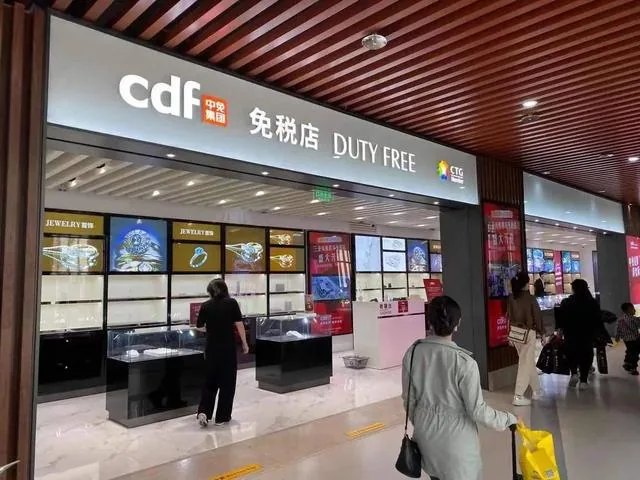
China has three separate ways to buy without paying full tax, and travellers mix them up constantly. Which one applies depends on where you are and how you're leaving — not on what you're buying.
1. Departure tax refund (退税商店) — what this guide is about. You buy ordinary, tax-inclusive goods at a registered shop in town, then claim roughly 9% of the VAT back on the way out. You pay first, you're refunded later.
2. Airport duty-free (机场免税店) — for international brands at the gate. Shops airside sell without import duty and VAT at the till, so there's nothing to claim afterwards; the discount is already in the shelf price. Better selection of international labels than most city shops, worse on Chinese brands.
3. Hainan offshore duty-free (海南离岛免税) — a scheme unique to the island. Not the same thing as the refund, and not only for Chinese shoppers: anyone leaving Hainan by plane, train or ferry, foreign passports included, can buy duty-free there under an annual allowance. If your trip ends by flying out of Hainan you're leaving the island and the country at once, and the two schemes overlap in ways the rules have adjusted more than once — ask at the counter what applies to your exact route. Our Hainan entry guide covers the visa-free side of that trip.
The practical difference: duty-free is a discount at the till with no paperwork, and the refund is money back later with three documents and a queue. If a shop offers you both, duty-free usually wins on international brands and the refund usually wins on Chinese ones.
Is the refund paperwork actually worth it?
For most visitors, yes — but only on the right purchases. Foreign visitors spent ¥263.6 billion in China between January and July 2026, up 27.8% year on year, and the number of travellers filing departure tax refunds more than tripled over the same period. Sales covered by the refund scheme rose 69% in the first half of 2026, which tells you the queue at the airport is not shrinking.
The break-even is simple. Below ¥200 in a single store on a single day, there is nothing to claim. Between ¥200 and roughly ¥1,000 the refund is small — under ¥90 — so it's worth doing only if you're already at the airport with time to spare. Above ¥1,000 it's real money, and above ¥5,000 it's worth planning your departure around: claim before check-in, keep the goods in your carry-on, and leave 30 extra minutes for the customs desk.
One more thing to budget for: the refund is paid in yuan. If you're on your way home and won't be back, that cash is only useful airside. Spend it on the last meal, or accept the exchange rate your bank offers on the transfer.
❓ Frequently Asked Questions
How much do I need to spend to claim a tax refund in China?
At least ¥200 at a single tax-refund store in a single day. Ask for the refund application form (离境退税申请单) and a VAT general invoice (增值税普通发票) at the till, and keep both — the refund can't be processed without them.
Do I need my passport to claim the refund?
Yes, and it has to be the physical passport you entered China on. The application form is written up with your passport type and number, and customs checks the document against the person in front of them. Phone photos and photocopies are not accepted.
How much of my money actually comes back?
About 9% on most goods and about 6% on reduced-rate items. The nominal rates are 11% and 8%, minus roughly 2% charged by the refund agency. On a ¥10,000 purchase that's around ¥900, not ¥1,100.
Can I get the refund in cash at the airport?
Yes, up to ¥20,000 per claim at the refund counter inside the departure area. Anything above that is paid by bank transfer. Some stores and city refund points also pay on the spot under the refund-upon-purchase (即买即退) scheme.
Do I need the goods with me at the airport?
For spot-checked claims, yes. Claims under ¥10,000 in sales value are drawn at random since July 2026; if yours isn't drawn you skip the inspection. Keep refund-eligible items in your carry-on or on top of your checked bag until you're past customs.
📚 Sources
- Ministry of Commerce — Service Platform for Departure Tax Refund (official English platform: tax-free store lookup, refund points, multilingual guide)
- Shopping in China: Tax Refund Policy Explained — bilingual MOFCOM guide (¥200 threshold, 11% / 8% rates, ID document, refund methods)
- MOFCOM and five other departments, notice No. 74 of 2026 (18 May 2026) — wider store coverage, spot checks under ¥10,000, paperless processing
- State Taxation Administration (July 2026) — refund-upon-purchase goes nationwide across regions from 1 September 2026; paperless filing, online-store pilot, national refund QR code
- Shanghai Tax Bureau — "Departure Tax Refund Policy for Overseas Visitors" (bilingual; 11% / 8% rates, 2% agency fee, ¥20,000 cash limit)
- Global Times — refund claims surge 285% in first 11 months (12,252 tax-refund shops nationwide, 7,000+ offering refund-upon-purchase)