🛍️ Shopping
China Shopping: What's Worth Buying in 2026
The categories where China genuinely wins on price, the ones where it doesn't, and how to get roughly 9% back when you leave.
⚡ What's worth buying in China?
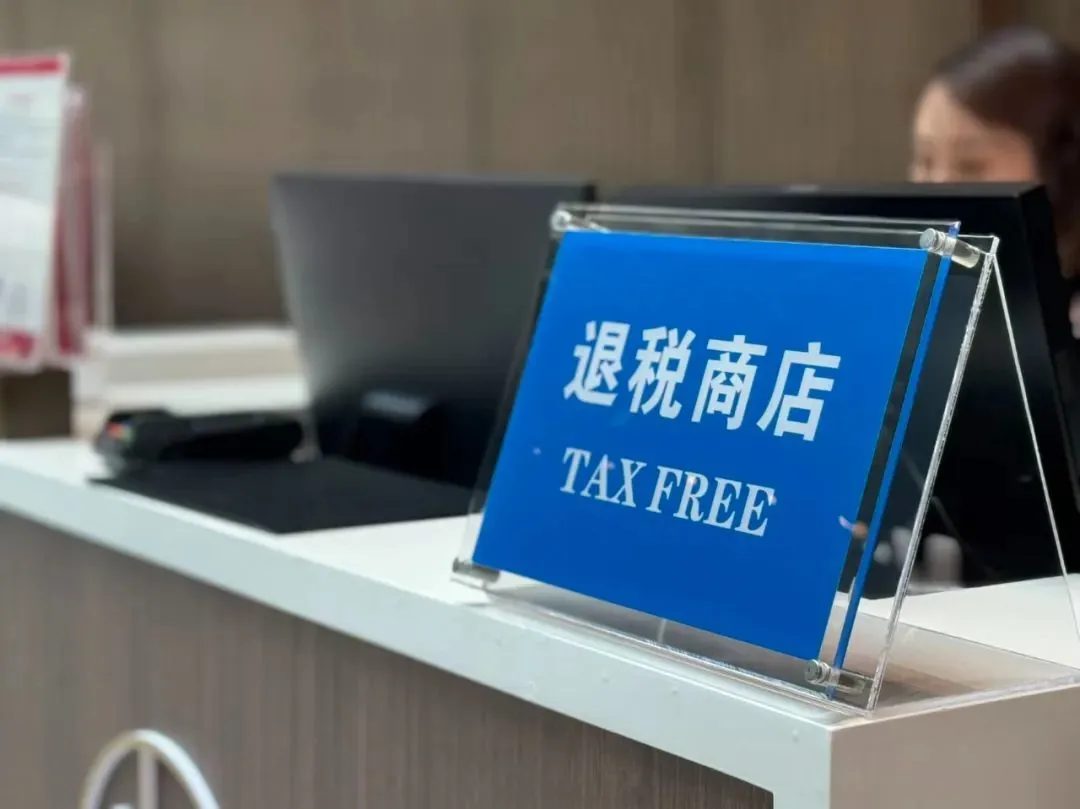
Quick answer: Stick to the categories that are genuinely cheaper in China or hard to find at home — Chinese cosmetics and skincare, Chinese-brand electronics (Huawei, Xiaomi, DJI), AI glasses and smart wearables, tea, silk, porcelain, jade, guochao designer labels, and traditional crafts. Skip anything you can buy at home for the same price — including Apple products, which are not cheaper in China. Shop at stores displaying the Tax Free (退税商店) sign and ask for the VAT invoice (增值税发票), and you can claim roughly 9% back when you fly home — see our departure tax refund guide for the current rules.
The short version of the trip-shopping playbook: pick a few categories that are uniquely good here, buy them at tax-refund shops, and pocket about 9% when you leave. Here's what's actually worth buying — and where to find it.
The honest version: China shopping only pays off in narrow lanes. Most of what tourists buy here — international fashion, perfume, cameras — is the same price or higher than at home, and the ~9% refund rarely closes the gap. The categories where China genuinely wins are the ones where the brands are Chinese, not imported. Two other frictions to expect: the refund needs a formal VAT invoice (增值税发票), which small stalls cannot issue, and tourist markets sell convincing fakes. Buy from brand stores and licensed counters, not from street vendors promising a deal.
What's worth buying in China?
There are essentially five categories where China genuinely wins on both price and selection, and where the tax-refund shops are dense enough to make the refund worth the paperwork. Stick to these and you'll come home with a great haul.
Cosmetics & Skincare
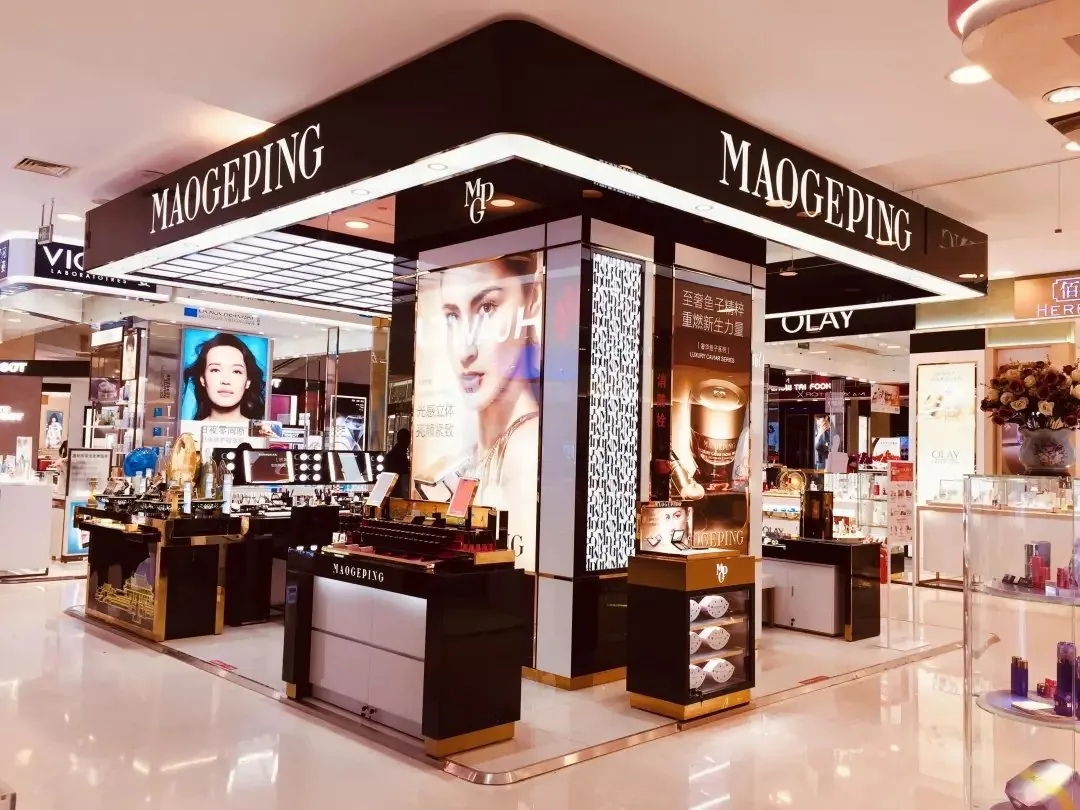
Chinese skincare and makeup — where your money actually goes further
Homegrown brands price for the domestic market, carry no import tax, and discount hard during 618 and Double 11. Several are now genuinely good, not just cheap:
- Proya (珀莱雅) — the double-anti essence (双抗精华) and ruby serum, focusing on brightening and anti-aging.
- Winona (薇诺娜) — built for sensitive, reactive skin. The moisturising cream is the one to take home if your skin hates airplanes.
- Comfy (可复美) and Bloomage's Bio-MESO (润百颜) / QUADI (夸迪) — recombinant collagen and hyaluronic-acid lines, a category China currently leads.
- Florasis (花西子) — carved-lipstick cases and pressed powder. The packaging is the souvenir.
- MAOGEPING (毛戈平) — the highlighter cream and contour palettes; this is what Chinese makeup artists actually use on set.
- To Summer (观夏) — Chinese-scent perfume and home fragrance, osmanthus and tea and cedar. Nothing quite like it sells abroad.
One caveat. Shade ranges are built for East Asian skin tones, so the deepest foundation shades are often missing.
International brands — buy the Asia-only sizes and the gifts, not the sticker price
If you want La Mer or SK-II, the maths only works duty-free. What's worth hunting on a normal counter is something else:
- Asia-only sizes and sets. 100ml+ versions of bestsellers, travel kits, and duo packs that never ship to Europe or the US.
- Lunar New Year and 520 limited editions. Chanel, Dior, and Estée Lauder all release China-market packaging every January and around 20 May. Same product, different bottle, never reissued.
- Gift-with-purchase that's actually generous. Department-store beauty halls hand out minis and deluxe samples at thresholds far lower than in Europe, and counter staff will often add more if you buy two items and ask. Sephora China works on the same logic.
Where to shop:
- Sephora (丝芙兰) — the anchor of the category; standard international brand range in every major city.
- Brand counters inside shopping malls — best for browsing, full-size testers, and getting the VAT invoice for the tax refund. Same prices as counters elsewhere, but with frequent gift-with-purchase bundles (miniatures, deluxe samples) you don't see abroad.
- DFS / China Duty Free at the airport — last-minute top-ups before flying out; the selection is smaller and prices are solid.
Guochao & Design-Led Local Brands
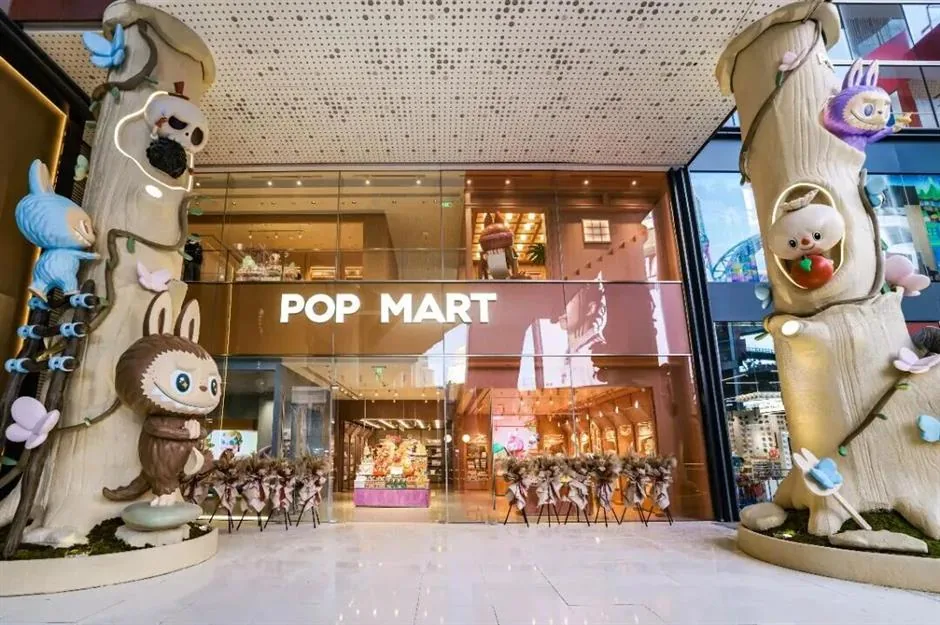
"Guochao" (国潮, the homegrown-brand wave) is the newest addition to official "must-buy" lists: at its September 2026 press conference the Ministry of Commerce cited domestic-brand smart products and design-led labels as a top reason foreign visitors now shop in China. Think flagship sportswear and streetwear labels, designer homeware and stationery, and collectible designer toys — Pop Mart-style figures are the best-known example of a China-born brand with a strong overseas resale market.
Where to shop: brand stores in the main shopping districts (Shanghai's Nanjing East Road (南京东路) and Jing'an (静安), Beijing's Wangfujing (王府井), and so on) and flagship concept stores in the big malls. Same refund rules as everything else — ask for the VAT invoice (增值税发票) at the register. Two practical checks before buying: sizing runs smaller than Western cuts on many local labels, and any electronics inside the product (charging specs, app regions) may differ from your home market.
Chinese Electronics (But Skip Apple)
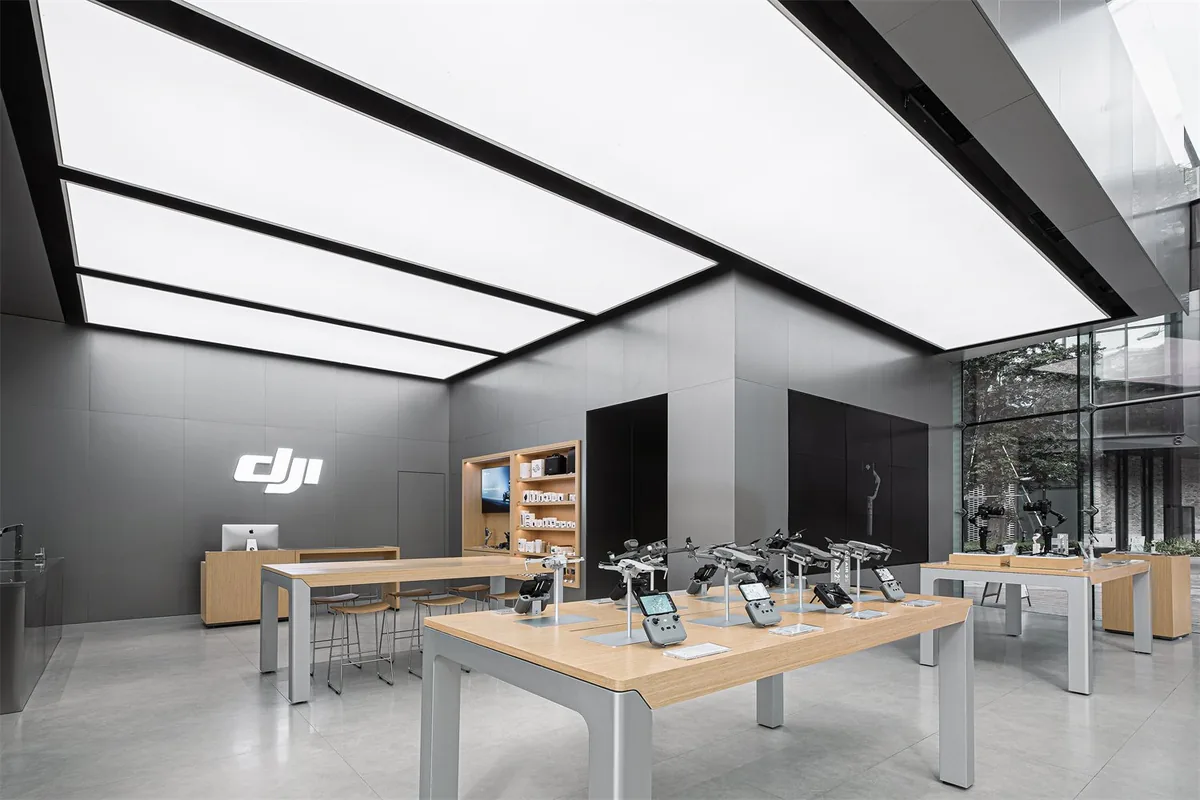
The real wins here are Chinese-brand flagships — Huawei (Mate XT, Mate X, Pura 70 Ultra), Xiaomi (15 Ultra, 14 series), OPPO Find X8 Ultra, Vivo X100 series, DJI drones and gimbals, Honor Magic series. Many don't sell abroad or are priced noticeably lower domestically.
The 2026 rising stars: AI glasses, smart wearables and folding phones are the categories the Ministry of Commerce now explicitly flags as foreign "must-buys." Folding flagships (the Huawei Mate XT, Xiaomi MIX) are frequently cheaper domestically than anywhere else, and AI glasses and smart bands from Chinese brands often haven't launched in your home market at all. Caveats stay the same: check that band/connectivity specs work at home, and confirm international warranty per SKU before you buy.
Skip Apple. The China-market iPhone is usually slightly more expensive than in the US, and the China version also lacks FaceTime audio calls. There's no tax-refund advantage to offset this. The same goes for MacBooks and most Canon/Nikon cameras.
Where to shop: brand flagship stores in every major mall — Huawei, Xiaomi, OPPO, DJI, and Dyson all run them, and they're the one-stop choice for foreign visitors: staff usually speak at least some English, the VAT invoice (增值税发票) is issued on the spot, and high-end models carry international warranty (verify the specific SKU if that matters to you). Always ask for the invoice — without it you can't claim the tax refund.
One city where the electronics market itself is the attraction: Shenzhen's Huaqiangbei (华强北). The world's largest electronics district has reinvented itself as a stop for foreign shoppers — it was drawing thousands of international visitors a day through 2025, and the big brands now keep flagship stores right inside the market (DJI included). It's the rare electronics bazaar that actually works for travelers who don't speak Chinese: multi-language signage, currency-exchange counters, and tax-refund support are all in place. If Shenzhen is anywhere near your route, the contrast alone — a city built from nothing in forty years, still buzzing at midnight — is worth a look. See our Shenzhen Travel Guide for how to fit it into your itinerary.
Quick self-check before you pay for any gadget
- Network bands — a phone sold for the China market may not carry the 4G/5G bands your carrier uses at home. Pull up the model's spec sheet and compare before committing.
- Apps & ecosystem — China-market phones often run without Google services. If you live on Google apps, confirm the device ships with the app ecosystem you need, or buy an international/global version.
- Warranty — international coverage is per-SKU, not per-brand, so ask which markets the warranty actually covers.
None of this is a dealbreaker on the big brands — it's just the difference between a great buy and a paperweight when you get home.
Tea, Silk, Porcelain, Jade
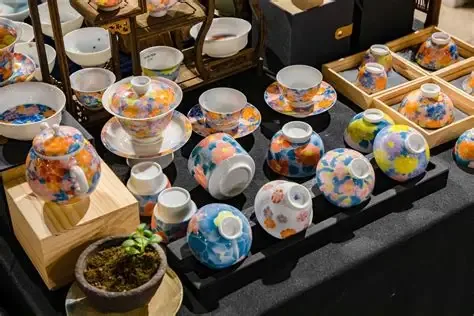
The genuinely "Made in China" buys travelers have been bringing home for centuries. Source cities have the best selection at the best prices:
- Tea (茶叶): Hangzhou for Longjing (龙井), Anxi (Fujian) for Tieguanyin (铁观音), Yunnan for Pu'er (普洱). Good loose leaf runs ¥100–500; once one store's total passes ¥200 (the refund threshold), the claim applies. Check whether a shop offers the refund before you buy — many tea stalls don't.
- Silk (丝绸): Hangzhou, Suzhou. Real silk scarves from ~¥100; quilts and robes go up from there. Look for the "100% Silk (真丝)" label.
- Porcelain (瓷器): Jingdezhen (景德镇) is the historic capital, with a deep bench of hand-painted studio work to sort through. Guangzhou is another hub.
- Jade (玉器): Buying jade means judging the four qualities — grain, translucency, colour, carving (种水色工) — and the trade fakes all four. Buy from a large chain — Caibai (菜百), Lao Feng Xiang (老凤祥), Chow Tai Fook (周大福) — where you can ask for an NGTC certificate and a VAT invoice (增值税发票). Skip street sellers, "lucky draw" prizes, and any shop a guide walks you into.
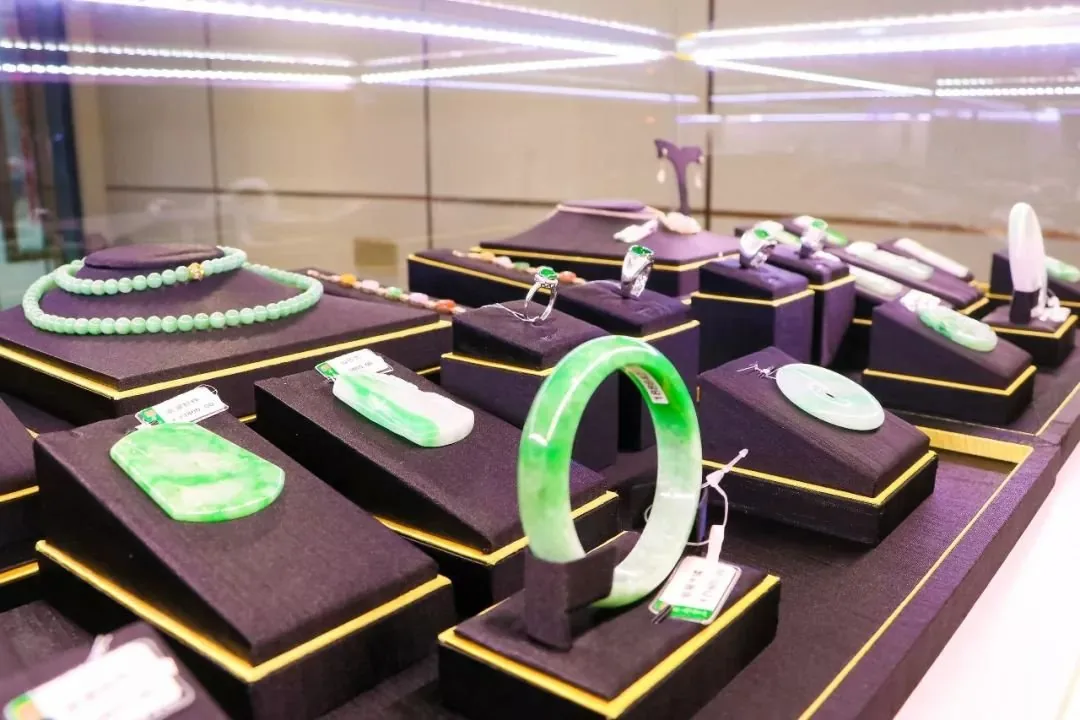
Refund note: silk, porcelain, jade, and baijiu sit in the standard 13% VAT category, so the usual ~9% back applies. Tea (a food/agricultural product) falls into the 9% VAT category, so you pocket ~6% instead. Full rules and the claim process live in the departure tax refund guide.
Spirits, Cloisonné, Traditional Crafts
- Baijiu (白酒): Maotai (茅台; from ¥1,500), Wuliangye (五粮液), Luzhou Laojiao (泸州老窖) — collectibles, gifts, and ceremony standards. Customs allows 1.5L per adult.
- Cloisonné (景泰蓝): Beijing specialty, ¥100–500, great gifts.
Where should you buy it?
Most of China's signature buys are made in one or two places, and that's where selection and prices are best. If your itinerary is already set, here's what each stop is good for:
Which Chinese city is best for which kind of buy
| City | The local specialty to look for | Where |
|---|---|---|
| Beijing | Jade, cloisonné, Maotai | Department-store jewellery halls and brand jewellers. Panjiayuan (潘家园) is for browsing, not buying — see our Beijing guide |
| Shanghai | Bespoke tailoring, guochao flagship stores, cosmetics | Nanjing East Road (南京东路) and Jing'an (静安); see our Shanghai guide |
| Shenzhen | Electronics — the market is the attraction | Huaqiangbei (华强北); see our Shenzhen guide |
| Hangzhou | Longjing tea (龙井), silk | Tea houses by West Lake (西湖); silk markets in the old town |
| Suzhou | Silk, Suzhou embroidery (苏绣) | Guanqianjie (观前街) area shops; look for the "100% Silk (真丝)" label |
| Jingdezhen | Porcelain — the historic capital | Pottery street markets |
| Yunnan | Pu'er tea | Specialty tea shops in Kunming and Dali |
One rule of thumb: buy at the source and you get better quality for the same money — and the ¥200 tax-refund threshold at a single store is easier to cross where the category is the local industry. If a city guide isn't linked above yet, it's on the way; the buy-locally logic holds regardless.
Where are China's tax-refund shops?
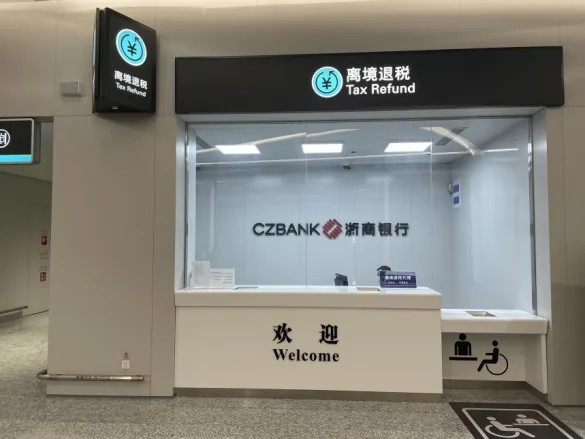
Walk into any major mall in Beijing, Shanghai, Shenzhen, Guangzhou, Chengdu, Hangzhou, or Suzhou, and roughly half the stores display a "Tax Free" (退税商店) sign near the entrance or the register. In practice, the categories most reliably flagged are exactly the ones you'd guess: cosmetics, electronics, fashion, tea, silk, porcelain, jade, and crafts.
What usually does not carry the sign: convenience stores, supermarkets, online-only sellers (Taobao / JD / Pinduoduo), street vendors, fake-goods markets, and most small independent shops. Night markets are great for snacks and atmosphere, but not the place for refund-eligible big-ticket items.
To find a specific store near you, search the Alipay or WeChat mini-program "Departure Tax Refund" (离境退税) — it shows nearby refund-eligible shops on a map, plus current opening hours and supported refund methods.
What are China's customs limits?
- Alcohol: 1.5 liters (spirits) duty-free; above that, declare.
- Tobacco: 400 cigarettes (2 cartons) duty-free.
- General goods: ¥5,000 duty-free allowance for personal use is the general threshold — check current rules before splurging.
❓ Frequently Asked Questions
What is actually cheaper to buy in China?
Chinese cosmetics and skincare, Chinese-brand electronics (Huawei, Xiaomi, DJI), AI glasses and smart wearables, guochao designer labels, plus tea, silk, porcelain, jade and cloisonné. International fashion, perfume and cameras are the same price or higher than at home.
Does shopping in China come with a tax refund?
Yes, at shops displaying the Tax Free (退税商店) sign. Spend at least ¥200 at one store in one day, keep the VAT invoice, and claim roughly 9% back at the airport when you leave.
What should I not buy in China?
Apple iPhones and MacBooks are the clearest example — the China price is higher and some features are cut, so the tax refund does not close the gap. Anything you can find at home for the same money is a wasted purchase.