🏙️ Shenzhen
Shenzhen Travel Guide: Tech Hub Next to Hong Kong
Visit Shenzhen — China's tech capital, gateway to Hong Kong, mountain-and-sea outdoor adventures, and a modern city built in just 40 years.
⚡ Quick Answer
Shenzhen is China's Silicon Valley — a city that grew from a fishing village to a 20-million-person megacity in just four decades. It's ultramodern, green, and the easiest place to cross into Hong Kong. If you're into tech, seafood, outdoor activities, or want to visit both mainland China and Hong Kong in one trip, Shenzhen is your city.
🤖 Why Visit Shenzhen?
Shenzhen is living proof of China's economic miracle. It's home to tech giants (Huawei, Tencent, DJI), futuristic architecture, and some of the best seafood in the country. It's also the main land border crossing to Hong Kong — you can be in Kowloon in under an hour by metro. For travelers who want to experience modern China at its most dynamic, Shenzhen delivers. Plus, the city's "Mountains-Sea-City" (山海连城) initiative has created stunning coastal cycling routes and mountain hikes that make it a hidden gem for outdoor lovers.
📅 How Many Days Do You Need?
- 2–3 days (standard): City sights, seafood, and a Hong Kong day trip
- 4–5 days (comfortable): Add Window of the World, Shenzhen Bay, and OCT Loft art district
- 5+ days (extended): Combine with Hong Kong for 2–3 days, or take a ferry to Macau
For sports & outdoor lovers: Add an extra day for the "Mountains-Sea-City" trail — cycle from Taiziwan to Shenzhen Bay along the coast (2–3 hours), or hike Qiniangshan on the Dapeng Peninsula for mountain-meets-ocean views (half day).
If you're staying longer, consider a side trip to Hong Kong. The high-speed rail or metro connection to Hong Kong takes under an hour.
🎯 Top Attractions
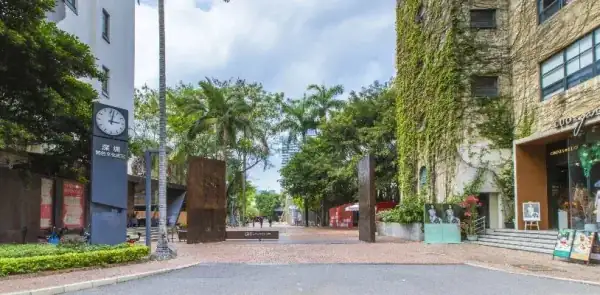
OCT Loft (华侨城创意文化园)
Shenzhen's answer to Beijing's 798 — a former factory complex turned into a creative arts district with galleries, design studios, indie bookstores, and weekend creative markets. The street art changes every few months, so there's always something new to discover. Allow 2-3 hours to wander through the courtyards and grab a coffee at one of the industrial-chic cafés. It's in Nanshan district, about 20 minutes from the city center by metro.
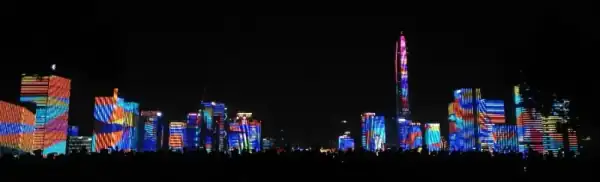
Lianhua Mountain Park (莲花山公园)
A hilltop park in the center of the city with panoramic views of Shenzhen's skyline — free entry, and the hike up takes about 20 minutes. Come in the evening for the Civic Center light show (市民中心灯光秀): dozens of skyscrapers light up in sync, turning the entire downtown into a canvas of neon and animation, pulsing to music on weekend evenings. A pure cyberpunk spectacle that captures Shenzhen's identity as China's tech capital.

Window of the World (世界之窗)
🎫 Advance booking online gets you a discount and skips the ticket line.
🛒 Book your Window of the World ticket →
A theme park with 130+ miniature replicas of world landmarks — the Eiffel Tower, Taj Mahal, Pyramids, you name it. Yes, it's cheesy. Yes, it's also genuinely fun, especially if you come for the evening cultural show and fireworks. The best strategy: go in the late afternoon, see the landmarks before dark, then stay for the nighttime performances. It's on Line 1/2 metro, about 30 minutes from the city center.
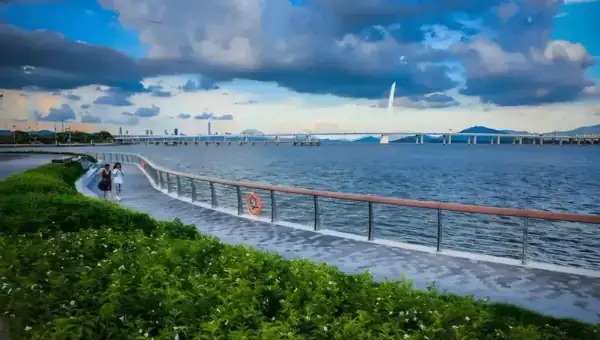
Shenzhen Bay Park (深圳湾公园)
A 15-kilometer coastal park with views across the bay to Hong Kong's New Territories. Perfect for sunset walks — the sky turns shades of orange and purple behind the Shenzhen Bay Bridge. If you visit between October and April (peaking December-March), thousands of migratory birds gather along the shore — black-faced spoonbills, red-billed gulls, and egrets feeding on the mudflats. Early morning or late afternoon are the best times to see them.
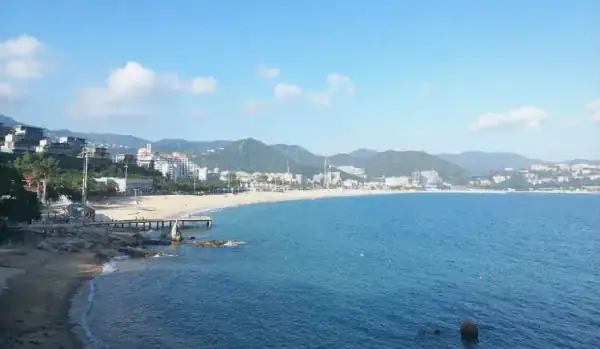
Dameisha Beach (大梅沙)
Shenzhen's most popular beach, about 30 minutes east of the city center. The sand is clean, the swimming area is roped off, and the backdrop of green hills makes it feel further from the city than it actually is. The boardwalk runs the length of the beach with seafood restaurants at one end. Go on a weekday if you can — weekends are packed and entry is capped at 80,000 visitors per day.
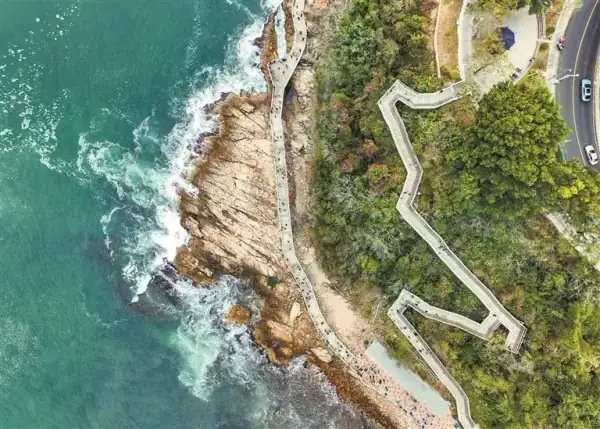
For Outdoor & Sports Lovers — Shenzhen's "Mountains-Sea-City" Trail (山海连城)
Shenzhen's city-wide initiative has created some fantastic outdoor routes that connect the mountains to the sea through the city. Two standout experiences:
- Coastal Cycling (太子湾 → 深圳湾): Ride along the dedicated bike path from Taiziwan to Shenzhen Bay Park. The Taiziwan section offers a 270° panoramic sea view, with the Shenzhen Bay Bridge and Hong Kong's mountains on the horizon. For a longer ride, the full western coastal route stretches about 50 km from Xihuan Mangrove to Futian Mangrove Eco-Park — a perfect half-day cycling adventure with sea breeze all the way. Just take a shared bike and ride.
- Mountain Hiking (七娘山): Head to Qiniangshan (七娘山), Shenzhen's second highest peak at 869 meters. Located on the Dapeng Peninsula, it's surrounded by the sea on three sides, giving you spectacular mountain-meets-ocean views at the summit. It's part of the Dapeng Peninsula National Geopark, about 1.5 hours from downtown Shenzhen.
🚇 Getting Around
- Subway: 12 lines covering the city and extending to the Hong Kong border (Luohu and Futian stations). Check the Metro & Bus Guide for Major Chinese Cities for line maps.
- Didi: Cheap and efficient. Most drivers understand basic English pick-up points. See How to Use Didi in China as a Foreigner for setup.
- High-speed rail: Shenzhen North Station connects to Guangzhou (30 min), Hong Kong West Kowloon (15 min), and other cities. Read the How to Book and Ride China High-Speed Rail for booking details.
- Walking: The city center (Futian and Nanshan) is very walkable with wide sidewalks and many parks.
🏨 Where to Stay
Futian District (福田区) — Best for first-time visitors
The central business district has the best metro connections and easy access to the Hong Kong border. High-end hotels and shopping malls.
Nanshan District (南山区) — Best for tech and coastal vibes
Home to Shenzhen's tech headquarters and close to Shenzhen Bay. More relaxed, with great seafood restaurants.
Luohu District (罗湖区) — Best for budget travel
The older center is near the Luohu border crossing to Hong Kong. More affordable hotels and the famous Dongmen shopping street.
🍜 What to Eat
Shenzhen's food scene is a mix of Cantonese heritage and migrant flavors from all over China. Fresh seafood is the highlight.

Chaoshan Beef Hotpot (潮汕牛肉火锅)
The pride of Chaoshan cuisine and a Shenzhen obsession. Paper-thin slices of premium beef — different cuts for different textures, from buttery brisket to snappy tendon — dipped briefly in a light beef bone broth, then into a dipping sauce of沙茶酱 (satay-style sauce) with fresh chili and garlic. The meat is so fresh it's often still warm from the butcher. The key to a great meal: order multiple cuts and don't overcook anything — 8 seconds in the broth is all it takes.
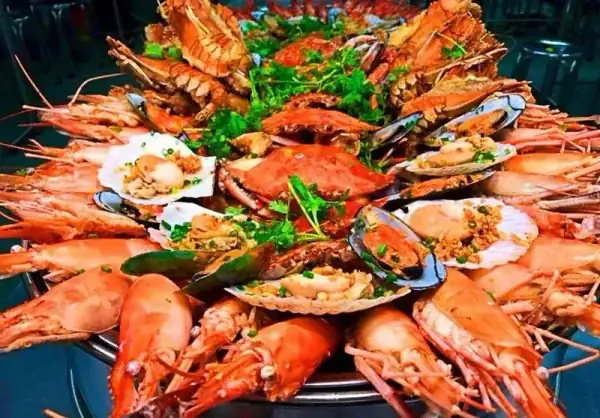
Cantonese-Style Seafood (粤式海鲜)
Shenzhen's proximity to the coast means the seafood here is exceptional — clams steamed with black bean sauce, mantis shrimp fried with garlic and chili, whole fish simply steamed with ginger and scallion until the flesh flakes apart. The best way to eat it: head to the local seafood markets, pick your catch from the tanks, and have the nearby restaurants cook it to order. A feast for two runs about ¥200-300.

Coconut Chicken (椰子鸡)
A dish you'll find nowhere else quite like this — tender chicken cooked in fresh coconut water inside a clay pot, giving the broth a natural sweetness that's light and fragrant. The three-step eating ritual: drink the coconut broth first (it's the best part), dip the chicken in a mixture of minced chili, soy sauce, and fresh lime, then add more coconut water to the pot as it reduces. It's a Shenzhen-born classic that's become a Cantonese staple.
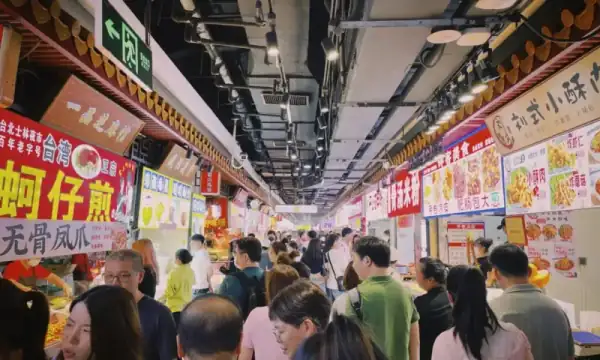
Dongmen Snacks (东门小吃)
Dongmen (东门) is Shenzhen's oldest shopping street, and at night it transforms into a vibrant street food destination. Grilled squid on sticks sizzling with cumin and chili, stinky tofu that smells worse than it tastes (trust the process), freshly squeezed sugarcane juice, and fruit tea with huge chunks of fresh mango and passion fruit. The move: arrive at dusk, walk the main street, and follow the smoke to find the busiest stalls — that's where the good stuff is. Most snacks cost ¥10-30.