🏙️ Guangzhou
Guangzhou Travel Guide: Food Capital of China
Explore Guangzhou — China's food capital with world-famous dim sum, Cantonese culture, and easy access to Hong Kong.
⚡ Quick Answer
If you eat to live in Beijing, you live to eat in Guangzhou. This southern city is widely regarded as China's food capital, and the cradle of Cantonese cuisine — arguably the most famous Chinese cuisine in the world. Beyond the food, Guangzhou offers subtropical greenery, a relaxed pace, and proximity to both Shenzhen and Hong Kong.
🥟 Why Visit Guangzhou?
Guangzhou has been a trading port for over 1,000 years. It's where Cantonese cuisine — dim sum, roasted meats, slow-cooked soups — was perfected and exported worldwide. The city has a subtropical climate (warm year-round), a vibrant riverfront, and a distinctly Cantonese culture that feels different from the north. It's also the gateway to the Pearl River Delta: Shenzhen is 30 minutes by high-speed rail, and Hong Kong is about an hour.
📅 How Many Days Do You Need?
- 2–3 days (standard): Dim sum, Canton Tower, Shamian Island, and a food tour
- 4–5 days (comfortable): Add Chimelong Safari Park, Kaiping Diaolou, or cross to Shenzhen
- 5+ days (extended): Combine with Shenzhen and Hong Kong for a complete Pearl River Delta trip
🎯 Top Attractions
Canton Tower (广州塔)
🎫 Advance booking recommended — book your observation deck time slot to skip the line.
🛒 Book your Canton Tower visit →
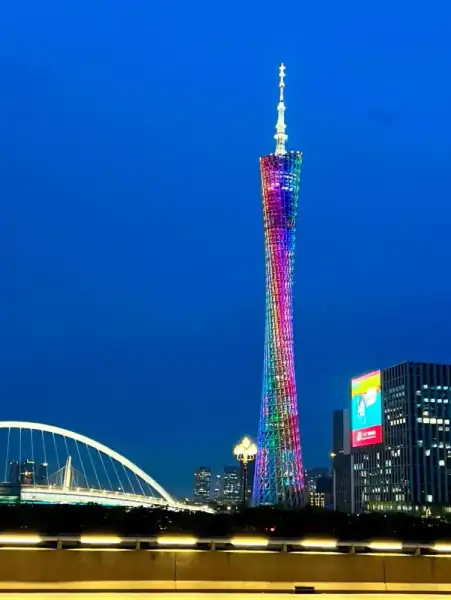
Locals call it the "Supermodel" for a reason — at 600 meters, it's the tallest structure in Guangdong. Go up to the 450-meter open-air deck for the bubble tram that circles the tower's waist, or try the sky drop ride if heights don't faze you. Time your visit for sunset when the whole city turns golden below, then stay for the light show after dark.
Shamian Island (沙面岛)
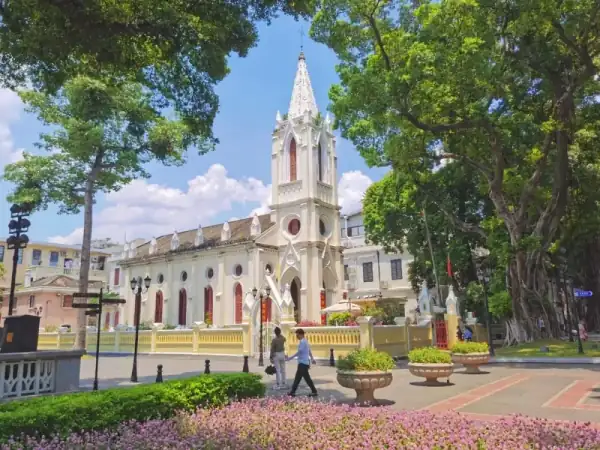
This tiny river island once housed European consulates in the 1860s, and those European consulate buildings still line the boulevards today. Giant 150-year-old banyan trees shade the pedestrian paths, their roots draped like curtains. It takes about 20 minutes to walk from one end to the other — best done in the late afternoon when the heat drops and the light filters through the leaves.
Chen Clan Ancestral Hall (陈家祠)
🎫 Entry via WeChat mini-program QR code at the gate — no advance booking needed
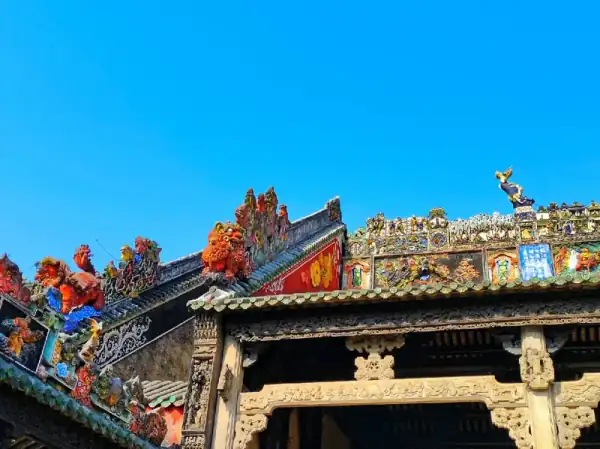
Built in 1894 by the Chen clan as an academy and temple, this complex has 19 halls packed with the finest Lingnan wood carvings you'll find anywhere in China. Every ridge beam and roof peak is covered in ceramic figurines — lions, dragons, immortals. It's now a folk art museum, so you can wander the halls and see the embroidery and pottery up close. Entry is bought at the gate via the WeChat mini-program QR code. Give yourself at least an hour.
Yuexiu Park (越秀公园)
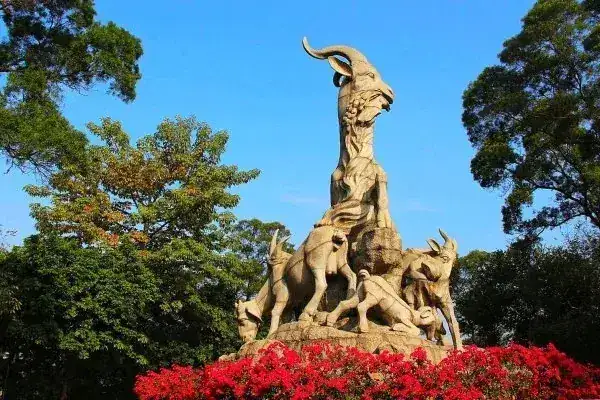
This park sits on a hill that was once a fort for the ancient Nanyue Kingdom, over 2,000 years ago. Inside you'll find the Five Rams Statue (the official symbol of Guangzhou) and the Zhenhai Tower, the oldest standing building in the city — built way back in 1380. Climb the tower for a decent view of the park below. Best on a weekday morning when it's mostly old locals practicing tai chi and playing mahjong.
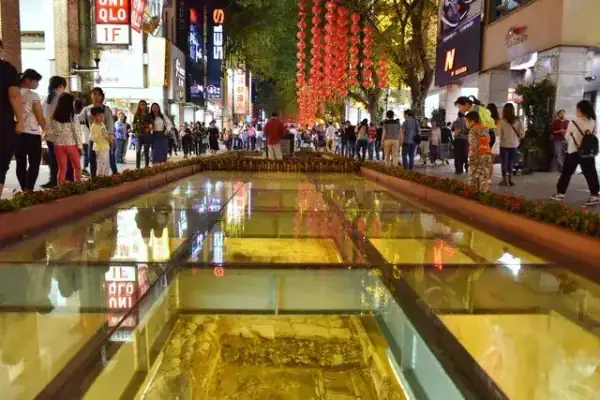
Beijing Road (北京路)
Under the glass panels at your feet, you can see the actual paved streets of the Song, Yuan, Ming, and Qing dynasties stacked like history layers — that's over 2,000 years of walking routes right beneath your shoes. Above ground, it's a non-stop shopping and snacking strip with fried milk, grilled squid, and bubble tea at every turn. Come after 7pm when the neon lights flicker on and the night market crowd takes over.
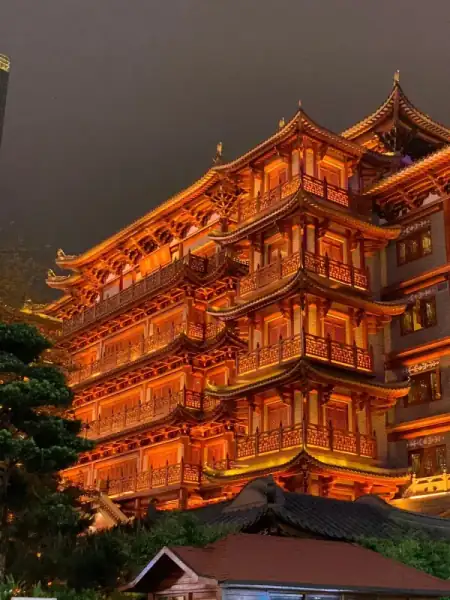
Grand Buddha Temple (大佛寺)
The main hall is 36 meters wide but has almost no interior columns — the whole roof is carried by a complex dougong bracket system, and you feel the space open up the moment you step inside. This isn't your typical Cantonese temple with colorful ceramic ridges. Built in 1663 by a Qing prince, it was modeled after imperial Beijing palace architecture, so it has that solemn Forbidden City scale you'd never expect to find in this part of China. Inside sit three 6-meter bronze Buddhas, each weighing 10 tons — Guangdong's largest surviving ancient bronze statues. The pillars are Vietnamese nanmu wood delivered over 350 years ago and still intact. You come for the kind of architectural rarity that simply doesn't exist anywhere else in Guangzhou.
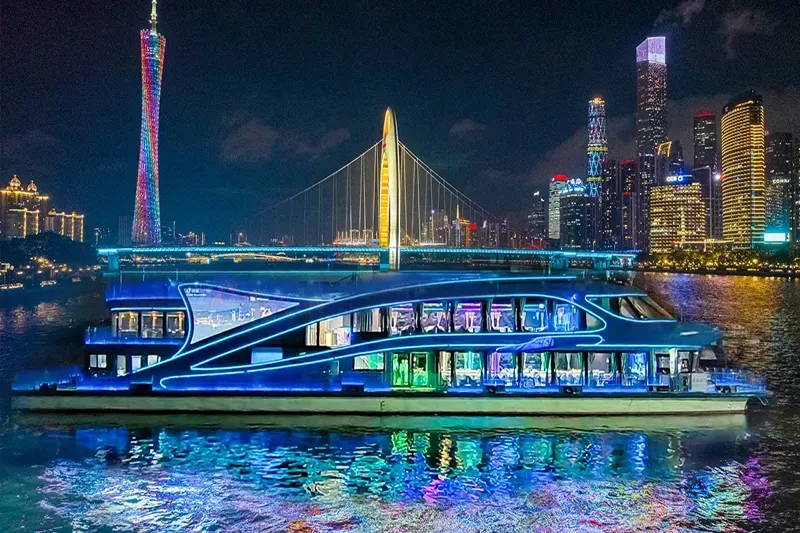
Pearl River Night Cruise (珠江夜游)
🎫 Book ahead to secure your cruise slot — evening sailings sell out fast.
🛒 Book your Pearl River cruise →
The standard way to see Guangzhou after dark — and it's worth doing at least once. Boats depart from piers along the river (Tianzi Wharf is the most central) and glide past the illuminated Canton Tower, the twisted Guangzhou IFC tower, and the old colonial buildings on Shamian Island's edge. Pick the pier that fits your route — the scenic stretch is the same from any boarding point — and choose the cheapest cabin class, since you'll be up on the open deck for the views anyway. The 60-80 minute cruise costs from around ¥88 depending on the boat class, and the upper deck is where you want to be. Bring a light jacket — the river breeze is cooler than you'd expect. The best time is just after 8 PM when the Canton Tower light show starts and the whole skyline pulses with color. It is touristy, but it's also the most effortless way to see the city from a different angle.
🚇 Getting Around
- Subway: Guangzhou's metro has 16 lines and reaches all major attractions. English signs everywhere. Check the Metro & Bus Guide for Major Chinese Cities for an overview.
- Didi: Cheap and widely available. A ride across the city center costs about 30–50 RMB. See How to Use Didi in China as a Foreigner for setup and tips.
- Pearl River Ferry: A scenic way to cross the river. Ferries run regularly between piers on both sides.
- High-speed rail: Guangzhou South Station connects to Shenzhen (30 min), Hong Kong (1 hour), and Zhuhai/Macau (1 hour). Read the How to Book and Ride China High-Speed Rail for booking instructions.
🏨 Where to Stay
Liwan District (荔湾区) — Best for food lovers
The heart of old Guangzhou. Stay here for authentic Cantonese restaurants and morning tea houses.
Tianhe District (天河区) — Best for modern travelers
The new CBD has shopping malls, international hotels, and excellent metro connections.
Haizhu District (海珠区) — Best for river views
Across the Pearl River from the city center. Quieter, with great views of the Canton Tower.
🍜 What to Eat
If you eat to live in Beijing, you live to eat in Guangzhou. Cantonese cuisine is world-famous for a reason.
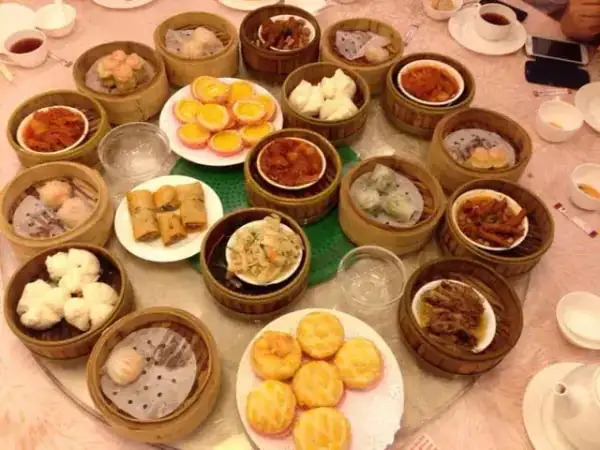
Dim Sum (点心)
The four classics to order: har gow with their translucent, almost see-through skins wrapping whole shrimp; siu mai topped with orange roe; char siu bao — impossibly fluffy white buns stuffed with sweet barbecued pork; and cheung fun, silky rice noodle rolls drizzled with soy. The ritual is called yum cha (drinking tea), and it happens every morning in dim sum houses across Liwan District. Go early — by 11am the queues stretch out the door.
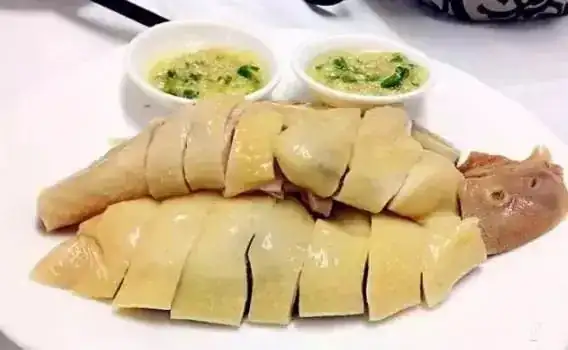
White Cut Chicken — Bai Qie Ji (白切鸡)
A whole chicken is gently poached, then served cold — and the key is that silky skin with the thin gelatinous layer underneath. Cantonese chefs consider this dish the ultimate test of skill because there's nowhere to hide: the chicken has to be perfect. Dip each piece in the ginger-scallion oil and you'll understand why something so simple can taste so good.
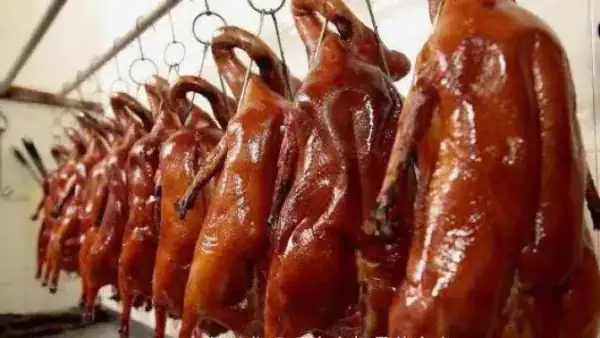
Roast Goose — Shao E (烧鹅)
A whole goose split open, marinated, and roasted over charcoal until the skin turns glass-brittle and the meat stays dark and juicy. It comes with a side of plum dipping sauce that cuts through the richness. This style originates from the Jiangmen area, just west of Guangzhou, and the best roast meat shops in town have been perfecting it for decades.
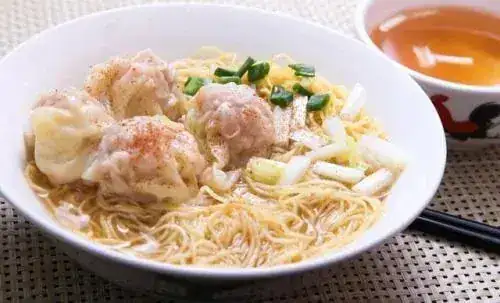
Wonton Noodles — Yun Tun Mian (云吞面)
The noodles are thin, springy, and made with alkaline water (the Cantonese "yue-style" noodle). The wontons are plump with whole shrimp and pork. But the real star is the broth — clear, golden, simmered with dried flounder and shrimp roe. It's the kind of bowl that feels restorative.
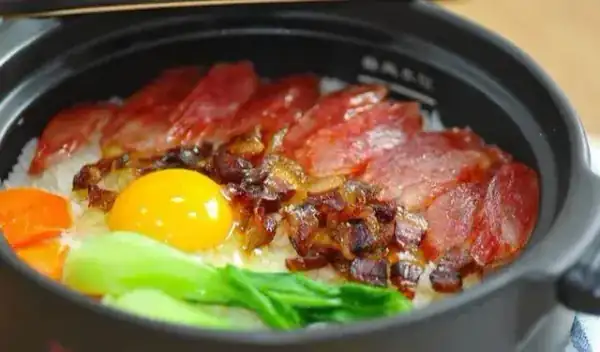
Claypot Rice — Bao Zai Fan (煲仔饭)
Raw rice goes into a clay pot, topped with Chinese sausage, cured pork belly, or chicken, then cooked over a charcoal fire. The magic is at the bottom — a layer of crispy, golden rice (the Cantonese version of socarrat) that you scrape up and mix in. Add a splash of soy sauce and give it a good stir before digging in.
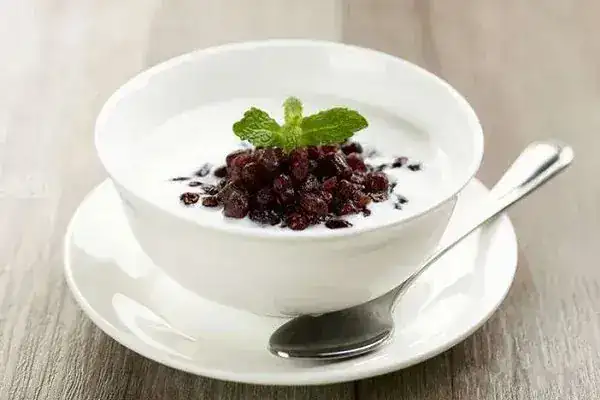
Double Skin Milk — Shuang Pi Nai (双皮奶)
This delicate dessert comes from Shunde, the culinary capital just south of Guangzhou. The name refers to the two layers of skin that form on top as the milk pudding cools — the first one sinks, then a second forms on the surface. It's smooth as custard but much lighter, and it works warm or cold.
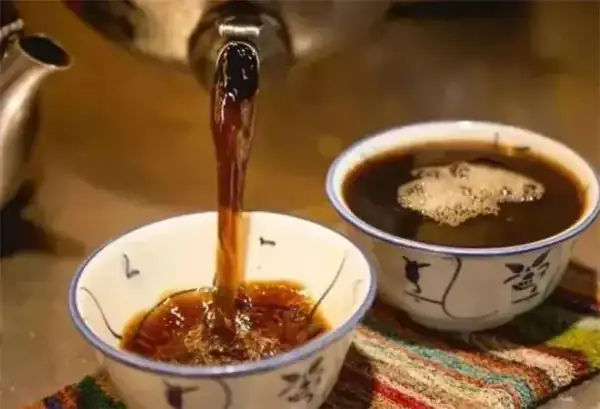
Herbal Tea — Liang Cha (凉茶)
Dark as cola and bitter as medicine — because it is medicine. Liang cha is brewed from 20 or more Chinese herbs, with different blends for different ailments (heatiness, sore throat, indigestion). Go for the full experience and order a "24 flavors" (24味) — it'll make your face scrunch, but locals say that's how you know it's working. Available at dedicated herbal tea shops all over the city.
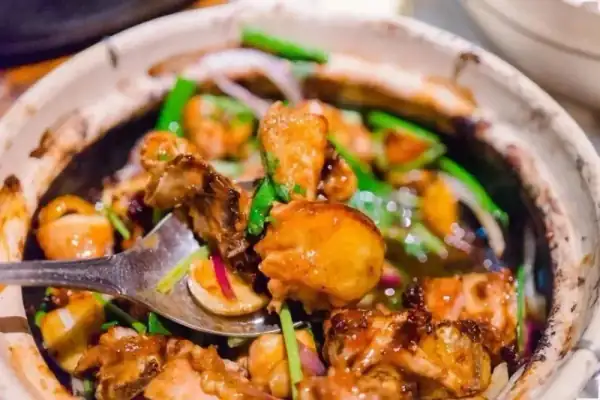
Claypot Cooking — Zhe Zhe Bao (啫啫煲)
The name comes from the sizzling sound ("zhe-zhe") the claypot makes when hot ingredients hit its surface. Unlike slow-cooked claypot rice, this is high-heat, fast-cook Cantonese cooking at its most dramatic: raw chicken, squid, beef, or eel goes into a pre-heated claypot with fermented black beans, garlic, and ginger, then gets tossed over an open flame for just a few minutes. The edges caramelize, the aroma hits you before the dish even reaches the table, and that first bite has a smoky depth you don't get from stir-frying in a wok. Order one pot per person — they're meant to be eaten piping hot straight from the clay.