🏙️ Beijing
Beijing Travel Guide: What to See, Eat, and Know
Your complete Beijing guide — attractions, transport, food, and where to stay.
⚡ Quick Answer
Beijing is China's political and cultural heart — home to the Forbidden City, the Great Wall, and some of the best Peking duck you'll ever eat. It's a city of contrasts where ancient alleyways (hutongs) sit alongside modern skyscrapers. Beijing is also the most convenient entry point for first-time visitors, with two international airports and the largest high-speed rail hub in the country.
🏛️ Why Visit Beijing?
Beijing has 7 UNESCO World Heritage sites — more than any other Chinese city. Walking through the Forbidden City, you're following the footsteps of 24 emperors across 720,000 square meters of gold-trimmed halls. Climbing the Great Wall puts you on a structure built over 2,000 years that snakes 21,000 kilometers across northern China. After dark, the city shifts gears: night markets in Wangfujing and Guijie hum past midnight, rooftop bars in Sanlitun fill up, and quiet hutong courtyards turn into hidden cocktail dens.
📅 How Many Days Do You Need?
3 days is the minimum for the essential Beijing experience.
- 3 days (standard): Forbidden City + Great Wall + a taste of hutongs and Temple of Heaven
- 4–5 days (comfortable): Add the Summer Palace, 798 Art District, and a food tour
- 5+ days (deep dive): Day trip to Chengde Mountain Resort or explore the city's lesser-known temples
The Great Wall alone takes a full day — it's about 1.5 hours by car to the nearest section (Mutianyu), so plan accordingly.
🎯 Top Attractions
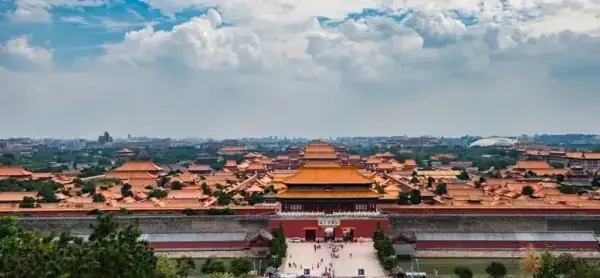
Forbidden City (故宫)
🎫 Entry is by timed reservation only — tickets open 7 days in advance and sell out fast. Closed Mondays.
🛒 Reserve your Forbidden City ticket →
The world's largest palace complex — and it feels even bigger when you're standing in it. The complex spans 720,000 square meters with nearly 1,000 buildings, all gold-trimmed roofs and red walls that haven't faded in 600 years. You'll walk on the same stones as 24 emperors, through courtyards so vast they make you feel small. Book tickets at least a week ahead — only 80,000 people get in each day, and it's closed every Monday.
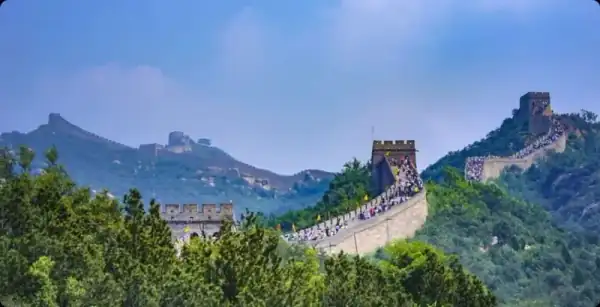
Mutianyu Great Wall (慕田峪长城)
🎫 Entry available at the gate, but booking online bundles the cable car round trip and skips the line.
The best-preserved section of the Great Wall, and the only one with a toboggan ride down. It stretches over 2,000 meters across 23 Ming-dynasty watchtowers, restored to their original condition. From the wall, you see forest-covered ridges rolling in every direction — no souvenir shops, no modern buildings, just mountains. Take the cable car up and the toboggan down; the whole thing is worth the 90-minute drive from town.
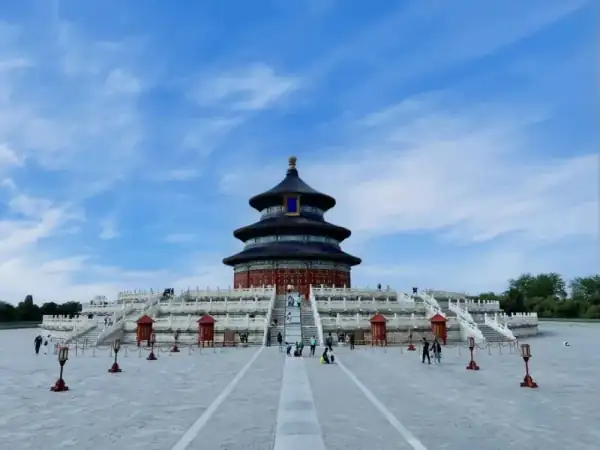
Temple of Heaven (天坛)
🎫 Book the combo ticket online (Hall of Prayer, Echo Wall & Circular Mound) to skip the ticket window.
🛒 Get your Temple of Heaven combo →
A perfect circle of blue-glazed tiles rising against the sky — the Temple of Heaven is where Ming and Qing emperors came to pray for good harvests. The Hall of Prayer for Good Harvests stands 38 meters tall, built entirely without a single nail. In the surrounding park you'll hear opera singers warming up, birdsong, and the clack of mahjong tiles before 7 AM. Go at dawn to see Beijing at its most local.
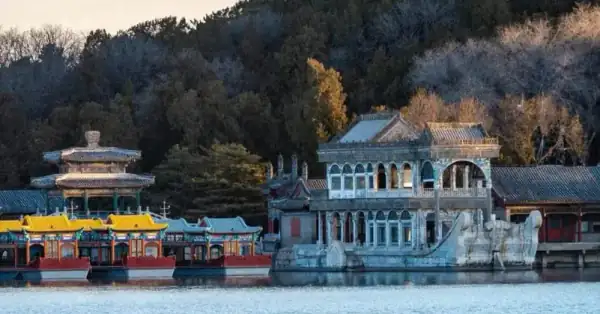
Summer Palace (颐和园)
🎫 Pay-at-gate is possible, but booking online skips the queue on busy days. Combo covers gardens + museum.
🛒 Book your Summer Palace visit →
An imperial escape so grand it makes other royal gardens look like courtyards — the Dowager Empress Cixi spent the navy's budget on this place. Kunming Lake alone covers 220 hectares, crossed by a 17-arch bridge that glows gold at sunset. Walk the shaded Long Corridor — 728 meters of painted ceilings with over 14,000 scenes from Chinese legend. Come in late autumn for golden ginkgo trees and thin crowds.
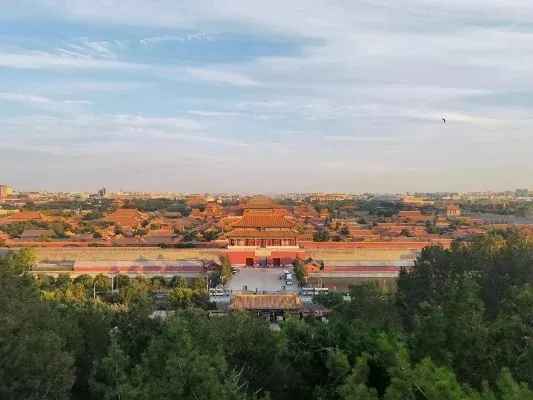
Jingshan Park (景山公园)
The single best view of the Forbidden City — and it's right across the street from the palace's north gate. Jingshan is an artificial hill built from the earth excavated during the Forbidden City's construction, so it rises directly above the palace rooftops. At sunset, the golden light hits the glazed tiles and the whole complex glows beneath you like a sea of red and gold. The climb takes five minutes. Go at 5 PM, grab a spot at the Wanchun Pavilion, and wait for the light to turn. This is the photo every Beijing visitor should have.
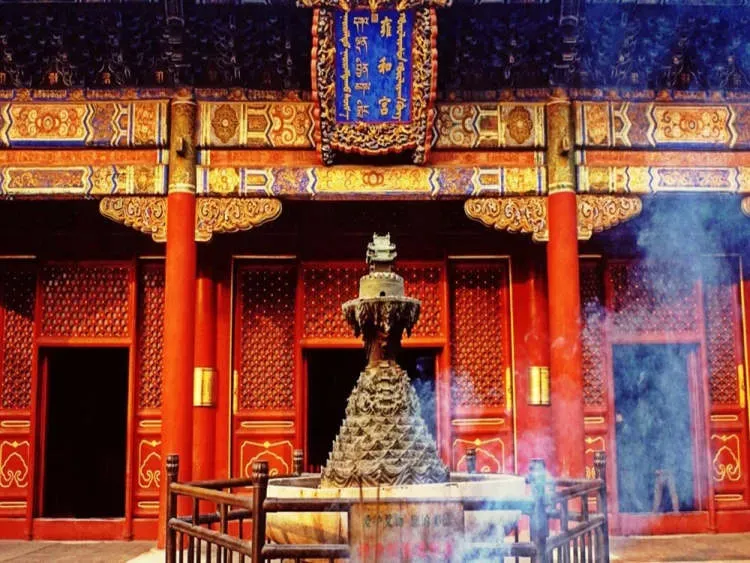
Lama Temple (雍和宫)
🎫 Walk-up tickets are available — booking online just skips the line.
🛒 Book your Lama Temple visit →
The most important Tibetan Buddhist temple outside Tibet — and a place where the line between tourism and devotion gets thin. The main hall houses a 26-meter sandalwood Buddha carved from a single tree, the tallest of its kind in the world. But what makes the Lama Temple feel alive is the incense: thick coils of sandalwood smoke drift through the courtyards, and locals queue with burning sticks to press their palms to the prayer wheels. If you're inclined, light a stick and make a wish — the temple has a reputation for answering prayers, and plenty of Beijing locals swear by it. Just don't photograph the worshippers up close. It is a working temple, not a museum.
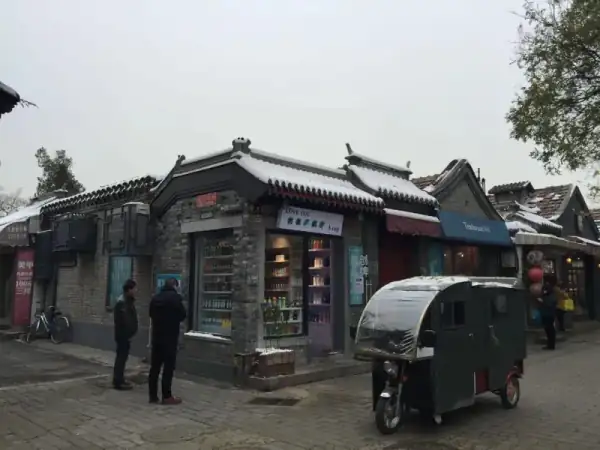
Hutongs (胡同)
Beijing's ancient alleyways that survived the wrecking ball — a network of narrow lanes where life hasn't changed much in a century. Some hutongs date back over 700 years to the Yuan dynasty. You'll see old men playing chess on stools, bicycles propped against grey brick walls, and laundry hanging between power lines. Skip the tourist-packed Nanluoguxiang and walk Wudaoying Hutong or the lanes around Shichahai instead.
🚇 Getting Around
- Subway: Beijing's metro is extensive, cheap, and has English signs. It covers almost every major attraction. See Metro & Bus Guide for Major Chinese Cities for tips on using the Beijing subway system.
- Didi (China's Uber): Super convenient for door-to-door trips. Download the app before you arrive. You can enter destinations in English. Learn how to set it up in How to Use Didi in China as a Foreigner.
- Taxis: Available, but communication can be challenging. Always show your destination in Chinese characters (have your hotel's name written in Chinese).
- Biking: Beijing is surprisingly bikeable. Shared bikes (Hellobike, Meituan) are everywhere. Just use Alipay or WeChat to scan and ride.
🏨 Where to Stay
Dongcheng District (东城区) — Best for first-time visitors
Central location near the Forbidden City, hutongs, and Wangfujing. Good balance of price and convenience.
Xicheng District (西城区) — Best for culture lovers
The quiet, traditional side. Near the Houhai lake area, Drum Tower, and many well-preserved hutongs.
Chaoyang District (朝阳区) — Best for business travelers
The modern CBD. Many international hotels and Western restaurants. Near the 798 Art District and Sanlitun nightlife.
🍜 What to Eat
Beijing's food scene is built around bold flavors, wheat-based dishes, and imperial culinary traditions.
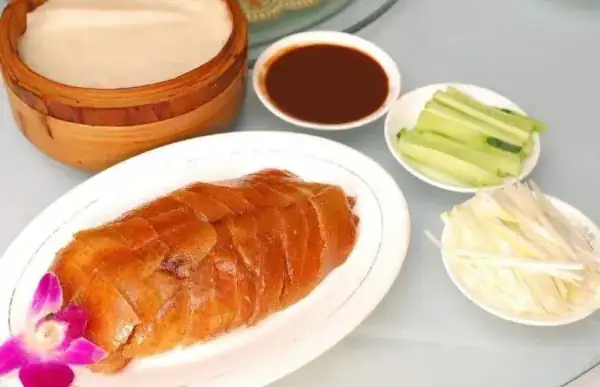
Peking Duck (北京烤鸭)
A whole duck roasted until the skin shatters like glass — that's Peking Duck. The skin is crisp and fatty, the meat tender, wrapped in paper-thin pancakes with sweet bean sauce, cucumber strips, and scallions. Some locals dip the crispy skin in white sugar before wrapping it up. The restaurants around Qianmen have been doing it the old-school way for generations.
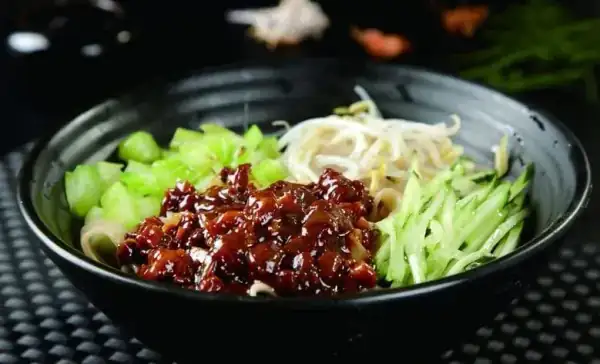
Zha Jiang Mian (炸酱面)
Thick hand-pulled noodles buried under a dark sauce made from fermented soybeans and minced pork. The sauce is salty and deep, with a slight bitterness from the bean paste, cut by fresh cucumber and bean sprout toppings. Mix everything together until every strand is coated before you take a bite. Find the best bowls in the old hutongs near Dongsi.

Jianbing (煎饼)
Beijing's breakfast on the go — a thin millet crepe spread on a hot griddle, cracked with an egg, and folded around a crunchy wonton cracker. The contrast is everything: soft crepe, crispy center, spicy chili sauce, and fresh scallions cutting through the richness. Eat it straight out of the foil wrapper while it's still hot. Grab one from a street cart near any subway station before 9 AM — they're usually gone by noon.
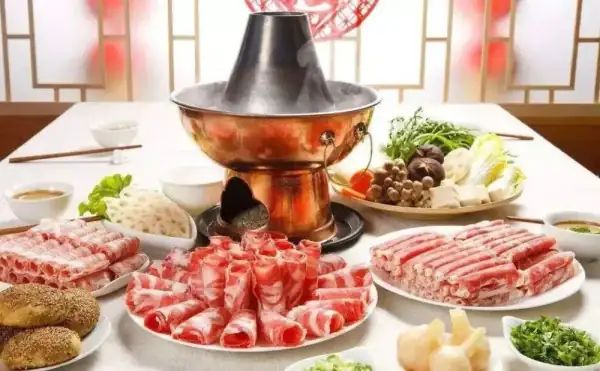
Lamb Hotpot — Shuan Yang Rou (涮羊肉)
A copper chimney pot filled with bubbling broth — this is the northern Chinese way of eating hotpot, and it's all about the lamb. The meat is sliced tissue-thin so it cooks in seconds, staying tender with a clean, gamey flavor. Swirl it in the boiling broth for no more than ten seconds, then drag it through sesame sauce with fermented tofu. The small family-run spots near Gulou are packed with locals on winter nights.
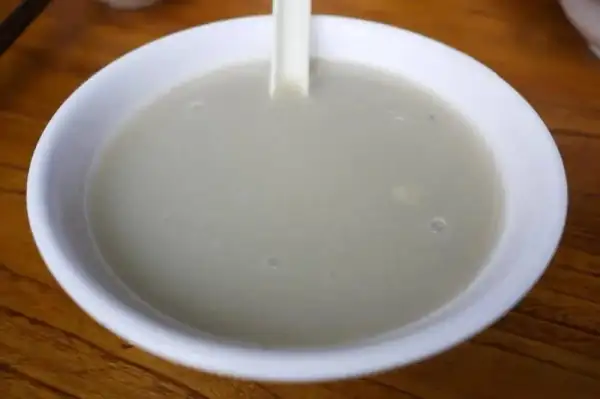
Douzhi (豆汁)
The drink that divides Beijing locals from everyone else — fermented mung bean juice that smells like old vegetables and tastes sour and earthy. It's served warm, with a gray-green hue and a slightly chunky texture, always alongside a salty sesame ring and pickled radish. You don't sip it, you gulp it. Order a bowl at the breakfast shops in the old hutongs near Tiantan and see if you're one of the few out-of-towners who actually likes it.
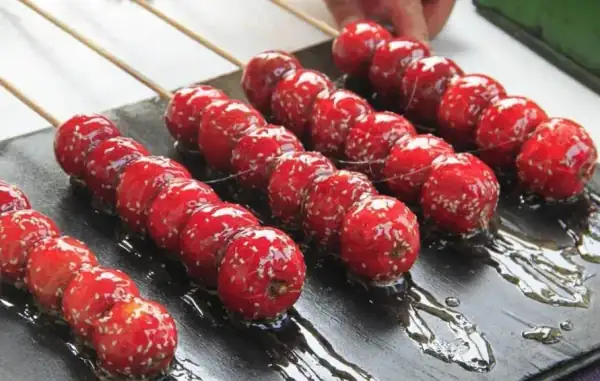
Sugar-coated Hawthorn (冰糖葫芦)
Candied hawthorn berries threaded on a bamboo stick and coated in a hard sugar shell. The first bite cracks the sugar, and then you hit the sourness of the berry — that sweet-and-sour rush is what makes it addictive. The sugar coating is thin enough to shatter, thick enough to keep the berries from tasting too tart. Vendors sell them on sticks from carts all over Wangfujing night market and the hutongs year-round.