🧱 Great Wall · Beijing
Great Wall of China: Which Section Should You Visit?
Badaling, Mutianyu, Jinshanling or Simatai — what actually separates them, and which one fits the trip you're planning.
⚡ Quick Answer
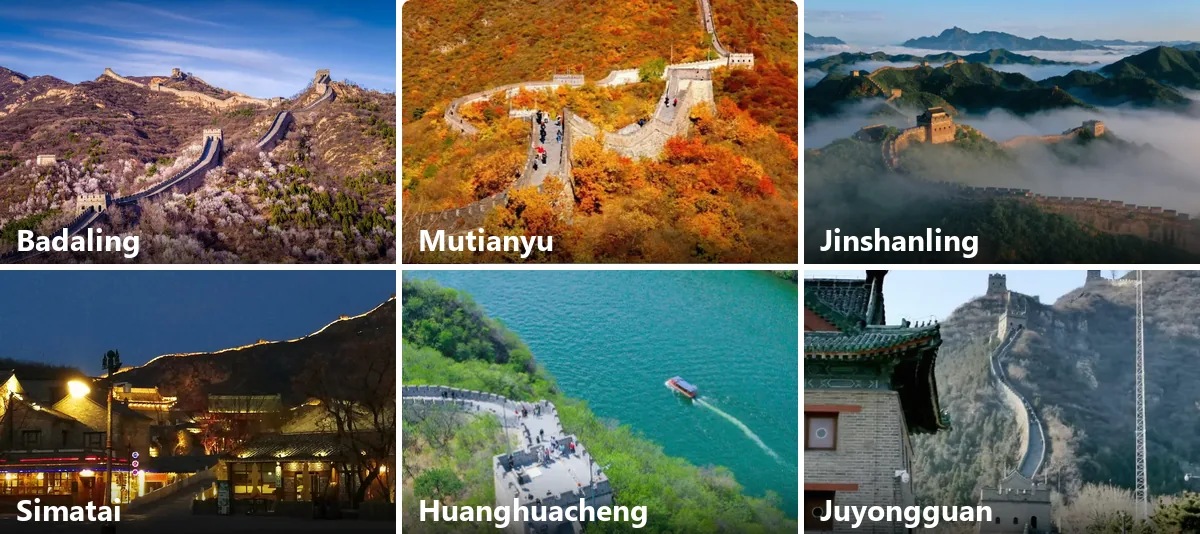
Mutianyu is the best all-round choice for most first-time visitors — fully restored and dramatic, with a cable car up and a toboggan down, at a fraction of Badaling's crowds. Badaling is the definitive one — the first section opened to tourists, the stretch visited by heads of state, and the most monumental of the restored stretches, climbing to the 888 m North Eighth Tower; it's also by far the busiest. Jinshanling is the hiker's and photographer's pick — quieter and less rebuilt, with 67 watchtowers and a pre-dawn opening for the sea of clouds. Simatai is the atmospheric one — year-round night tours, with Gubei Water Town right at its foot. Huanghuacheng is the oddity — the only section where the wall drops into open water, with boats and a glass bridge. Juyongguan is the closest and quietest pass — a fortress loop rather than a ridge climb, and the best half-day or winter bet.
🤔 Which Section Should You Visit?
Every section is, technically, the same wall. But no two give you the same day. The differences that matter aren't the distance or the ticket price — they're how crowded it gets, how hard you have to work, and what the wall is actually doing when you get there (sweeping over ridges, dropping into a lake, or lit up against a night sky). The sections below are ordered by how likely they are to suit a first or second visit.
How the Six Great Wall Sections Compare
| Section | Distance from Beijing | Crowds | Difficulty | Entry | Time needed | Good for kids? | The standout moment |
|---|---|---|---|---|---|---|---|
| Badaling | 70 km · HSR ~35 min | Extreme | Easy | ¥40 | 3–4 h | Yes (ropeway) | The sheer scale — and the biggest night show |
| Mutianyu | 70 km · ~1.5 h drive | Moderate | Easy–moderate | ¥45 | Half day | Yes (cable car + toboggan) | 23 restored towers, then sledding down |
| Jinshanling | 130 km · ~2.5 h drive | Low | Strenuous | ¥65 | Full day | No | 67 towers packed close, sea of clouds at dawn |
| Simatai | 120 km · ~2.5 h drive | Low | Strenuous | ¥40 day | Half–full day | Older kids | The wall glowing above Gubei Water Town at night |
| Huanghuacheng | 60 km · ~1.5 h drive | Low–moderate | Moderate | ¥58 | Half day | Yes | The wall walking straight into a lake |
| Juyongguan | 60 km · ~1 h drive | Low | Moderate | ¥45 (Apr–Oct) | Half day | Yes | The "No. 1 Pass Under Heaven" — and spring blossom trains |
Prices are peak-season adult tickets; students typically pay half and children under 1.2 m usually go free. Rates change by season and section — confirm before you go.
🌙 Can You Visit the Great Wall at Night?
Distance and price separate these sections less than three practical questions do: can you get up without climbing, is there a shuttle from the car park, and does it open after dark? Here is the full picture.
| Section | Night tour | Getting up | Shuttle / transfer | Signature extra |
|---|---|---|---|---|
| Badaling | ✅ Every night, 30 Apr–6 Oct (entry 18:30–21:00) | Cable car or ground ropeway, ¥100 one-way | Free park shuttle; "Great Wall Bus" ¥80 return | The wall lit from North Tower 4 to South Tower 4 |
| Mutianyu | ✅ Seasonal windows (summer; National Day) | Cable car up, toboggan down | Shuttle ¥15 return | The toboggan run |
| Jinshanling | ❌ | Cable car ¥40 one-way / ¥60 return | One-way transfer bus ~¥80 | Sea of clouds at sunrise |
| Simatai | ✅ Year-round (18:00–21:30) | Cable car — compulsory after dark | — | Gubei Water Town, right at the foot |
| Huanghuacheng | ❌ | No cable car — magnetic slide down the boardwalk | Coach or private transfer | Boats on the lake, plus a glass bridge |
| Juyongguan | ✅ Fri & Sat nights + holidays, to early Oct | No cable car — you walk up and down | — | A Ming-era night festival inside the pass |
One distinction worth getting straight: a shuttle is not the same as easy access. At every section except Badaling, the shuttle covers only the last leg — from the car park to the gate — and you still need a bus, a car, or a tour to reach that car park in the first place. Badaling is the only section with its own railway station: the Beijing–Zhangjiakou high-speed line runs to Badaling Changcheng, roughly 30–40 minutes from Beijing North, and the station sits about 800 m from the climbing entrance with a free shuttle covering the last stretch. That's why it's the one you can visit with no car and no tour — and also why it draws the biggest crowds.
Night-tour tickets (2026): Badaling ¥198 weekday / ¥298 Fri–Sun and holidays, booked online in advance (no ticket window on site); Mutianyu ¥200 including entry, shuttle and cable car; Simatai ¥200 for the night tour plus round-trip cable car (Gubei Water Town ticket not included); Juyongguan early-bird from ¥19.9. Every night session is timed-entry and capped, so book ahead — weekend slots at Badaling often sell out two or three days out.
🏔️ Badaling: The Most Monumental Stretch — and the Busiest
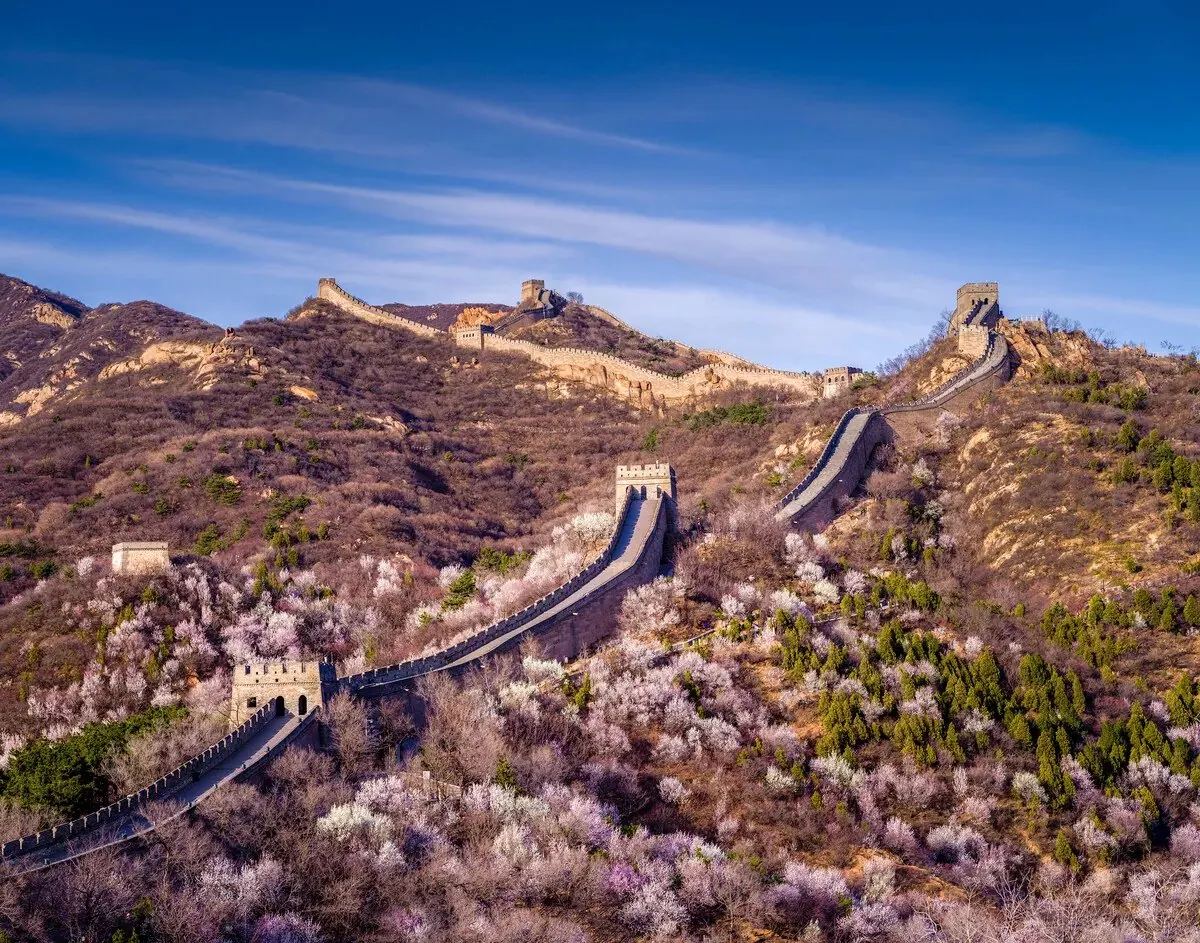
Why people go Badaling is the most famous section in China and the one foreign heads of state are taken to. It's fully restored, wide, and dramatic, with the wall climbing steeply over the ridge in both directions — the widest and most monumental of the restored stretches, running up to the North Eighth Tower at 888 m, marked by the "He who has not been to the Great Wall is not a true man" stele. You get the full "I'm standing on the Great Wall" feeling — and no other section gives you this much wall for so little planning.
What's the catch Everyone knows this. On weekends or public holidays, Badaling gets very crowded, and you might be swept along by the crowd. The trick is timing: be at the gate when it opens (around 7 am), and you'll have the first hour largely to yourself.
Getting there High-speed train to Badaling Changcheng station — about 20–25 minutes from Qinghe (¥16–25) or 30–40 minutes from Beijing North (¥25–31); the station sits roughly 800 m from the climbing entrance. Bus 877, now from North Tudicheng metro (Lines 8/10), is the budget option at ¥12. Book the train early — seats on the Beijing–Zhangjiakou line sell out fast on weekends and holidays, and tickets open 15 days ahead on 12306 or Trip.com. If you'd rather skip the train, the Trip.com listing below also sells a round-trip shuttle bus with an onboard guide — bookable on its own or bundled with admission — which costs less than a private car and runs direct, with none of the public-bus transfers.
Cost Entry ¥40 peak / ¥35 off-season. The north-line cable car or the south-line ground ropeway is ¥100 one-way, ¥140 round trip.
Night wall From 30 April to 6 October, Badaling runs a night session every evening — entry 18:30–21:00, towers lit from 19:20, last exit 22:00. Only the stretch between North Tower 4 and South Tower 4 is open at night (the "Good Man" slope at N8 is not). Tickets are ¥198 on weekdays and ¥298 Fri–Sun and public holidays, capped at around 3,000 people a night.
Best for Anyone who wants the definitive Wall — the state-visit stretch, the best night show, and the section you can reach without a car — and can live with the crowds.
Skip the transfers — book Badaling tickets and the round-trip bus together:
🛒 Book Badaling tickets + round-trip bus on Trip.com
🌳 Mutianyu: Is It the Best Section for First-Timers?
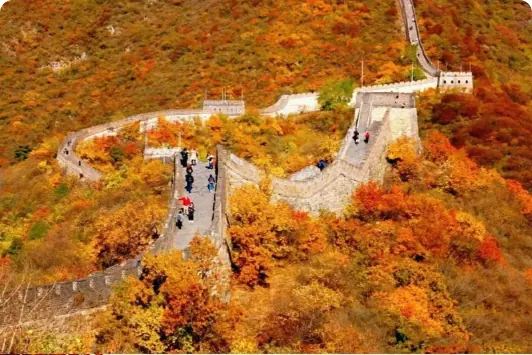
Why people go Mutianyu is what most people picture when they imagine a perfect Great Wall day — fully restored and sweeping, with 23 watchtowers marching over forested hills, but with a fraction of Badaling's traffic. On weekdays it can feel almost private. The other draw is the descent: a toboggan (a metal sled on a long track) runs from the wall back down to the village, and it turns a history outing into a memory for kids.
How it works A shuttle bus takes you from the parking area to the base, then a cable car lifts you to tower 14. You walk the wall as far as you like — tower 20 is the high point with the best panorama — then either walk back or ride the toboggan down.
Getting there No high-speed rail. Tourist shuttle buses leave from Dongzhimen and Heping Xiqiao (about ¥80 round trip, 1.5 hours), or book a private car — the most common choice for foreign visitors. The easiest way to book the bus is through the Trip.com listing below, which sells the direct shuttle (English-speaking guide on board) either bundled with admission or on its own — cheaper than a private car and far quicker than the metro-plus-two-buses route.
Cost Entry ¥45. Shuttle ¥15 round trip. Cable car ¥100 one-way / ¥140 round trip. Toboggan around ¥100.
Summer nights Mutianyu also opens after dark in seasonal windows — summer, then again over the National Day holiday — 17:30–21:00, with watchtowers 10–15 open. The night package (around ¥200) covers entry, the shuttle, and the cable car; the toboggan does not run after dark.
Best for Most first-time visitors. It's the best balance of scenery, comfort, and manageable crowds.
Ticket, direct bus, or both — book it as a package or on its own:
☁️ Jinshanling: Is the 2.5-Hour Drive Worth It?
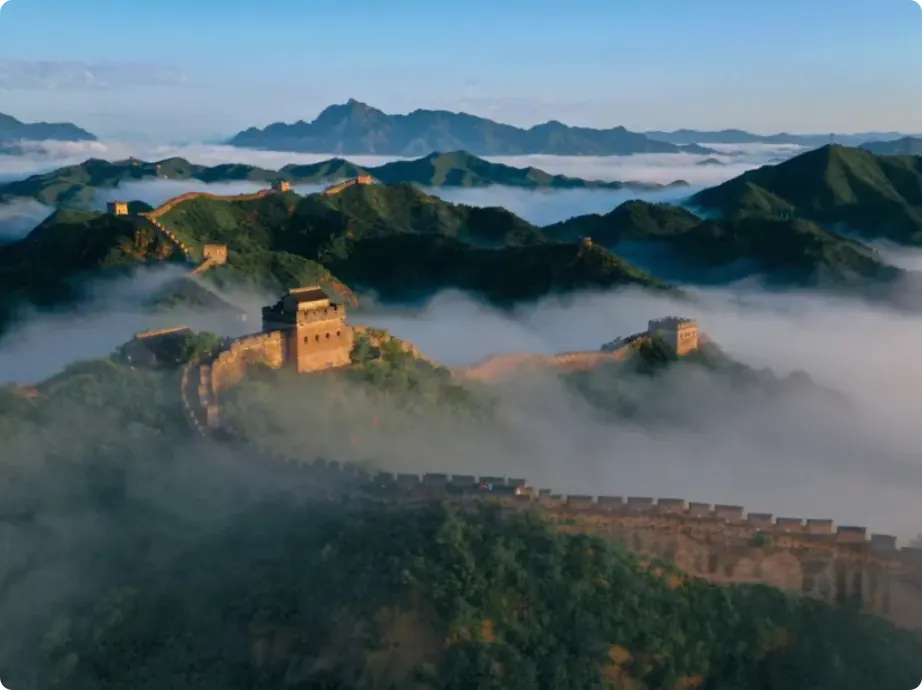
Why people go Jinshanling is the quietest of the classics — you can walk for long stretches with almost nobody else around. It's less rebuilt than Mutianyu or Badaling, so you get more of the original Ming brickwork and far fewer crowds, with 67 watchtowers and three beacon towers packed into about 10.5 km, so you're never far from the next one. Because it opens before dawn, it's the go-to for the sea of clouds and sunrise shots that fill your feed in autumn.
The honest version This is a real hike, not a stroll — steep stairs, uneven stone, and long exposed stretches without handrails. It's also the far one, about 2.5 hours from Beijing in neighbouring Hebei province.
Getting there Private car or tour (about 2–2.5 h); a seasonal direct bus runs from Dongzhimen in the warmer months, or take a train to Gubeikou and a taxi onward. Trip.com also lists a shuttle transfer (~¥80 one-way) — that's the ride only; the gate ticket is ¥65, and you can buy the two separately or as a package.
Cost Entry ¥65 peak / ¥55 off-season — and tickets bought on-site are valid for two entries within 48 hours, a real gift if you want to come back for sunrise. Cable car ¥40 one-way / ¥60 round trip, up to Small Jinshan Tower.
Best for Photographers, hikers, and anyone who has already ticked off the classics and wants the wall with nobody on it.
Ticket and round-trip transfer in one booking — or split them:
🛒 Book Jinshanling on Trip.com
🌃 Simatai: What's the Wall Like After Dark?
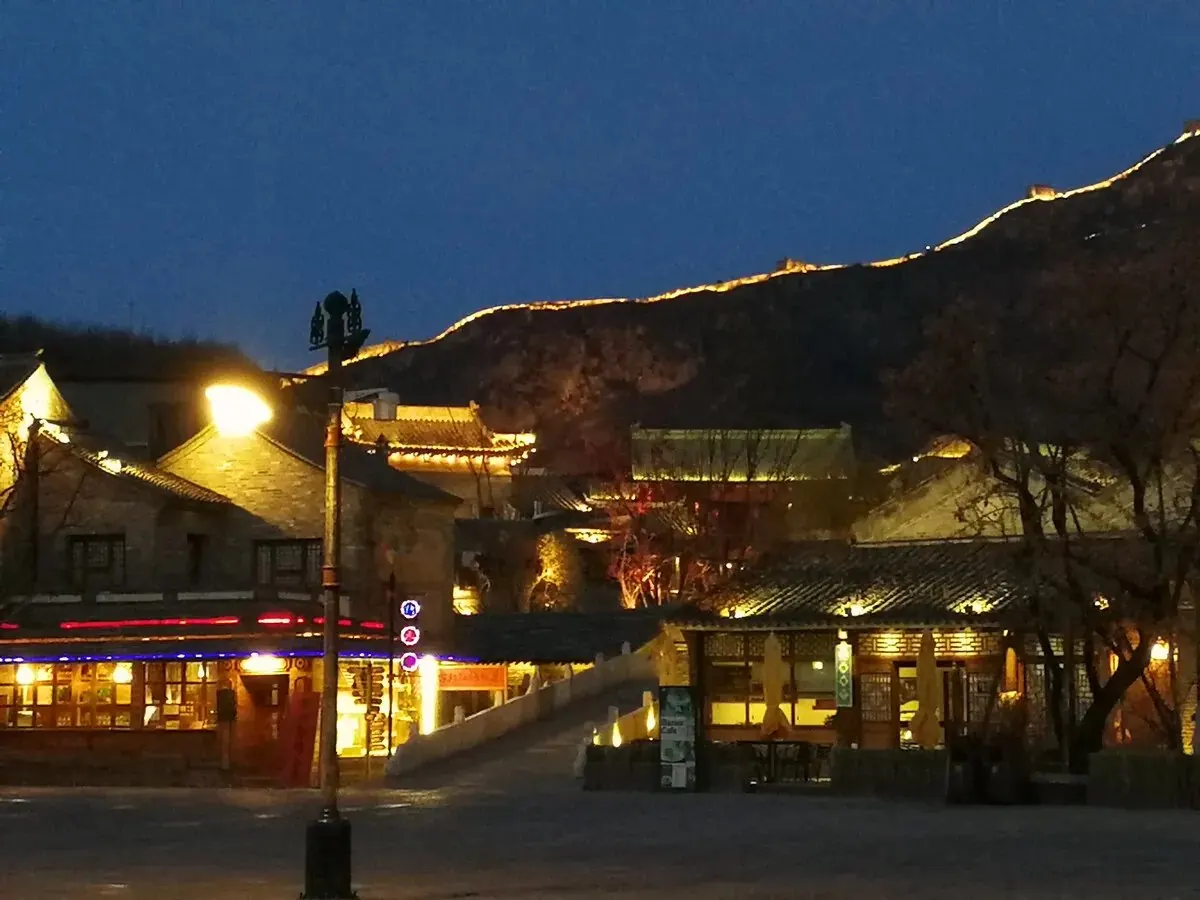
Why people go Simatai is the classic night wall — it runs night tours year-round, and the lit towers glow above Gubei Water Town, a rebuilt canal town at its foot. Stay overnight in the town, wander it by lantern, then ride up to the illuminated wall after dark. The daytime wall is steeper and more original than Mutianyu's, running over sharp ridges in both directions.
The honest version Because of the town, Simatai is more of a package than a pure wall hike: day and night tickets are separate, and night entry requires the round-trip cable car (you can't hike up or down after dark). Day visitors must leave by late afternoon, so you can't simply stay on from day into night.
Getting there Private car or tour from Beijing, about 2–2.5 h, and most people pair it with an overnight in Gubei Water Town at the foot of the wall. The Trip.com listing below also sells a round-trip bus to the town and the wall, with the night ticket or on its own.
Cost Day entry around ¥40. The night tour plus round-trip cable car is ¥200/person (children 1.2–1.5 m ¥110) — after dark, the cable car is the only way up. A Gubei Water Town + Wall + cable-car package is ¥280, and overnight guests in the town pay ¥120 — book ahead.
Pair it with Gubei Water Town The rebuilt canal town sits directly at the foot of the wall, and most people visit the two as a single trip — lantern-lit lanes in the late afternoon, then the lit wall after dark. The tickets are separate and the night tour does not include the town, so budget for both.
Best for Couples and photographers who want atmosphere; anyone who'd rather see the wall lit up than stand in a daytime crowd.
Night ticket and round-trip bus, bundled — or book just the ride:
💧 Huanghuacheng: Where the Wall Walks Into a Lake
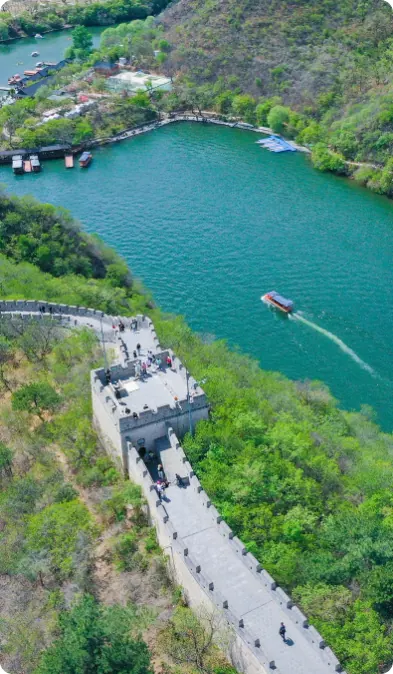
Why people go This is the one place in China where the wall walks in and out of open water three times — a reservoir dam built in the 1970s raised the water level and drowned the lowest stretch, leaving towers rising out of a turquoise lake. Around it are a Ming-era chestnut grove (with trees several hundred years old) and an easy lakeside boardwalk. It's green, quiet, and nothing like the postcard wall.
The honest version The submerged stretch is short — this is a half-day, not a full one — and the best views are near the entrance, so weekends can feel busy. The extras (boat, glass bridge, slide) all cost more.
Key sights The submerged wall ("dragon drinking at the water"), the glass bridge, and the Ming chestnut grove.
On the water This is the only section where you can get onto the water itself — sightseeing boats and painted pleasure boats cross the lake (around ¥25 one-way / ¥45 return), with a cloud-top glass rafting ride and a magnetic slide down the boardwalk as further add-ons. All water activities require an additional fee on top of the admission price.
Getting there About 1–1.5 hours by car or DiDi from central Beijing; harder by public transport (buses from Dongzhimen toward Huanghuacheng).
Cost Entry is around ¥58; boats, the glass bridge, and the slides are all paid extras.
Best for Anyone who has seen the classic wall and wants something genuinely different; a relaxed half-day with kids.
Ticket, bus and boat ride together — the easy way to cover the lake extras:
🛒 Book Huanghuacheng on Trip.com
🏯 Juyongguan: The Best Half-Day Section From Beijing?
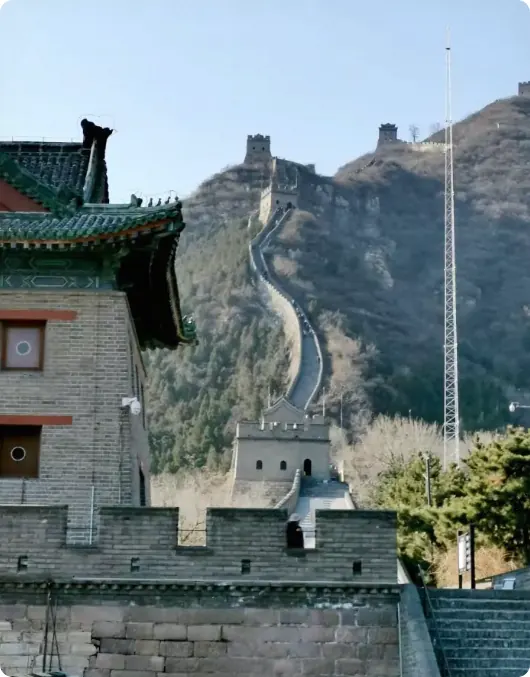
Why people go Juyongguan is the nearest section to the city (less than 60 km, in Changping) and the one built as a fortress pass rather than a ridge-top wall — you walk a complete loop in a valley, past the "No. 1 Pass Under Heaven" gate, with a Ming Cloud Platform (云台) and a temple complex inside. Because it's close and less famous, it's the quietest of the easy options, and it's open early and late (roughly 6:30 am–6 pm). From late March to mid-April, the hillsides fill with mountain peach and apricot blossom and the "flower-sea train" — the S2 suburban railway — threads through the valley below, a spring-only photo worth the detour.
Getting there Metro Line 8/13 to Huoying, then bus 879/919 to Juyongguan; or about an hour by car/DiDi.
Cost Entry ¥45 (April–October) / ¥40 (November–March); children over 1.2 m and students pay the discounted rate.
Night session On Friday and Saturday nights plus public holidays through early October (18:00–21:00), the pass runs an immersive night event — guards parading the old post road, folk bands up on the towers, lantern-lit ramparts, and a night market inside the compound.
No cable car Juyongguan is one of only two major sections with no uphill lift (Huanghuacheng is the other) — and the only one with no slide down either, so you walk up and back. The loop is shorter and gentler than Mutianyu's or Jinshanling's, but budget for the climb.
Best for Half-day trips, winter visits, history fans, and anyone who wants the wall without an early start or a long drive.
Ticket and round-trip transport in one booking — the simplest half-day option:
🎫 Do You Need to Book Tickets in Advance?
- Book in advance for Badaling — on peak days the gate sells out and there's no ticket window for walk-ups.
- Night tickets are sold separately and are capped, timed-entry; at Badaling, they're online-only and often sell out two to three days ahead on weekends.
- Foreign visitors need their passport to buy and enter at every section.
- Peak season runs roughly April–October; the prices in the table above are peak-season rates.
⏰ The one rule that matters: go early. Tour groups arrive between 9:30 and 11 am — be on the wall before 9 am for the version you see in photos.
📅 Best Time to Go
Every section has a season and an hour where it looks the way you imagined it. These are the windows the six sections above are actually known for.
- 🍂 Autumn is the photographer's season. Jinshanling opens before dawn and is the go-to for the sea of clouds and sunrise shots that fill your feed in autumn — and a peak-season ticket bought on-site is valid for two entries within 48 hours.
- 🌸 Late March to mid-April brings mountain peach and apricot blossom to Juyongguan's hillsides, plus the spring-only "flower-sea train" threading the valley below.
- 🌙 Night tours run 30 April to 6 October at Badaling, in seasonal summer windows at Mutianyu, year-round at Simatai, and on Friday and Saturday nights at Juyongguan.
- ❄️ Winter is the quiet season. Juyongguan is the best winter bet — close, open early and late, and the quietest of the easy options.
- 📅 Peak season runs roughly April–October; the prices in the comparison table are peak-season rates, and off-season tickets are a little cheaper (Badaling ¥35, Jinshanling ¥55).
👟 What Should You Pack for the Great Wall?
- 2–3 litres of water per person — there are no shops along the wall.
- Sunscreen and a hat in summer; warm, windproof layers in winter (the wall is always colder and windier than the city).
- Proper shoes: trainers are fine for Badaling, Mutianyu, and Juyongguan; hiking boots for Jinshanling and Simatai.
📜 What Are You Actually Walking On? Ming Bricks, Not Qin
The Great Wall is not a single wall but a system — multiple dynasties built, connected, and rebuilt over 2,000+ years. Most of what you see today is Ming dynasty construction (1368–1644); the older Qin and Han earthworks have largely eroded. The full network spans 21,196 km as measured by China's State Administration of Cultural Heritage in 2012 — that counts every branch and trench, not just the headline wall. The walkable restored portions total about 700 km.
A few details worth knowing as you walk:
- The eastern sections were rebuilt by a famous general. Qi Jiguang, the Ming general who reorganised the wall in the 1560s–70s, added the dense watchtowers and crenellations you see at Mutianyu, Jinshanling, and Badaling.
- At Jinshanling, look at the bricks. Many carry carved marks — the original builders stamped their kiln and unit onto each brick so faults could be traced back to a team. It's Ming-era quality control, in stone.
- The mortar is stranger than it looks. Restored sections kept the original recipe — sticky-rice flour mixed into the lime mortar, part of why these walls have survived for centuries.
- The watchtowers were multi-purpose. They stored weapons and grain, housed the garrison, and sent signals — smoke by day, fire by night. That's why they sit within sight of one another along the whole wall.
Sources
- 1. Badaling Great Wall — Beijing Micro-Getaway Guide: Must-Visit Attractions
- 2. Night tours across the four sections — Ecological Leisure | Badaling Night Great Wall; Upgraded Juyongguan Night Great Wall; Beijing's Golden Autumn Vibe, Double the Festival Joy.
- 3. Mutianyu Great Wall — 2026 night-tour guide
- 4. Jinshanling Great Wall — Two-day trip towards autumn foliage with one ticket
- 5. Huanghuacheng (Water Great Wall) — Beijing Huanghuacheng Lakeside Great Wall
- 6. Juyongguan Great Wall — Juyongguan Great Wall (居庸关长城)
- 7. Simatai Great Wall — Experience night scenery at Simatai Great Wall
- 8. Getting there — Come to Badaling Great Wall for moon appreciation.
All figures above are peak-season adult rates. Sources are the official Beijing tourism portal (english.visitbeijing.com.cn) and the scenic areas' own English sites, checked in September 2026.